
If you teach middle school math, there’s a good chance you’ve heard this classic question more than once:
“But when am I ever going to use this in real life?”
You’re right in the middle of modeling a problem, all your students are taking notes, and suddenly the hands shoot up. Honestly…your students aren’t wrong for wondering. Ratios, proportions, and percents can feel abstract when they’re taught as isolated calculations instead of tools we use in everyday life.
But once students start seeing these concepts out in the world, everything clicks. Real-world math examples help them understand why the math matters, build deeper conceptual understanding, and increase engagement (especially for students who struggle with procedural skills).
In this blog post, I’ll break down practical, low-prep ways to help students connect ratios, proportions, and percents to the world around them.

Table of Contents
ToggleWhy Real World Connections Matter
Students remember what feels meaningful. When they can tie a proportional relationship to something they see at home, at the store, or online, their understanding becomes stickier and far more intuitive. Real-world examples give abstract concepts a purpose and help students visualize what the numbers actually represent.
When math feels disconnected from their day-to-day life, it’s easy for them to disengage. Most students already use ratios and percents every day. They just don’t recognize it yet. Our job is to help them make those connections visible.
How to Connect Ratios, Proportions, and Percents to Real Life
Real-world math doesn’t have to be complicated. Start with simple, familiar scenarios that students instantly recognize.
Ratios in Real Life
Ratios show up everywhere, especially in comparison situations. Some easy-to-model examples include:
Recipes
Ratios appear constantly in everyday decision-making, and students often don’t realize how familiar they already are with them. Recipes are one of the best examples because they show how ingredients relate to each other. You can discuss how doubling or tripling a recipe changes the ratio and why precision matters. This ties beautifully into proportional reasoning later on.
Maps
Map scales are another powerful model, especially for students who love geography. When students see that 1 inch on a map equals 100 miles in real life, they begin to understand ratios as comparisons rather than isolated numbers.
Comparing Speeds
You can even bring in speed comparisons, such as pace per mile in running or mph in driving, to show how ratios describe real-world rates.
Proportions in Real Life
Proportions help students understand relationships that grow or shrink at the same rate. Students often struggle with proportions because they seem abstract. These examples help them see the purpose.
Scale Drawings
Scale drawings are one of the most relatable examples because they’re used everywhere: architecture, interior design, graphic design, art, and even video game development. When students see how a smaller representation matches a larger object proportionally, they begin to understand why maintaining the same ratio matters.
Resizing Photos
Resizing photos is another everyday example students immediately understand. Most kids have taken a screenshot, made edits, or adjusted picture size. Connecting proportions to digital media brings the concept into their world and gives it immediate value.
Similarity
Similarity in geometry is also rooted in proportional reasoning. When students compare side lengths or angles in similar figures, proportions are the backbone of their analysis.
Percentages in Real Life
Percent word problems make more sense when they’re tied to real expenses and purchases students care about. They could be considered the easiest real-world tie-in because students see them everywhere:
Discounts and Sales
You can show two shirts with different discount percentages and have students figure out which deal is actually better. This naturally leads to discussions about markdowns, additional discounts, and percent decrease.
Tips and Taxes
Tips and taxes are essential life skills and can transition your lessons to percent applications seamlessly. Students often don’t understand how taxes are calculated or why tipping is standard, so turning these into word problems makes them more meaningful.
Interest
Interest is one of the most important real-world percent topics. Connecting percent increase to savings accounts, loans, or credit cards gives students a glimpse into financial literacy.
Low-Prep Classroom Activities For Ratios, Proportions, and Percents
Real World Applications
This real world math activity will challenge and engage your students in solving ratios, proportions, and percents word problems. This application is more than just interpreting the question and quickly getting to the answer. Your students will be challenged to think critically about each scenario and defend their solutions.
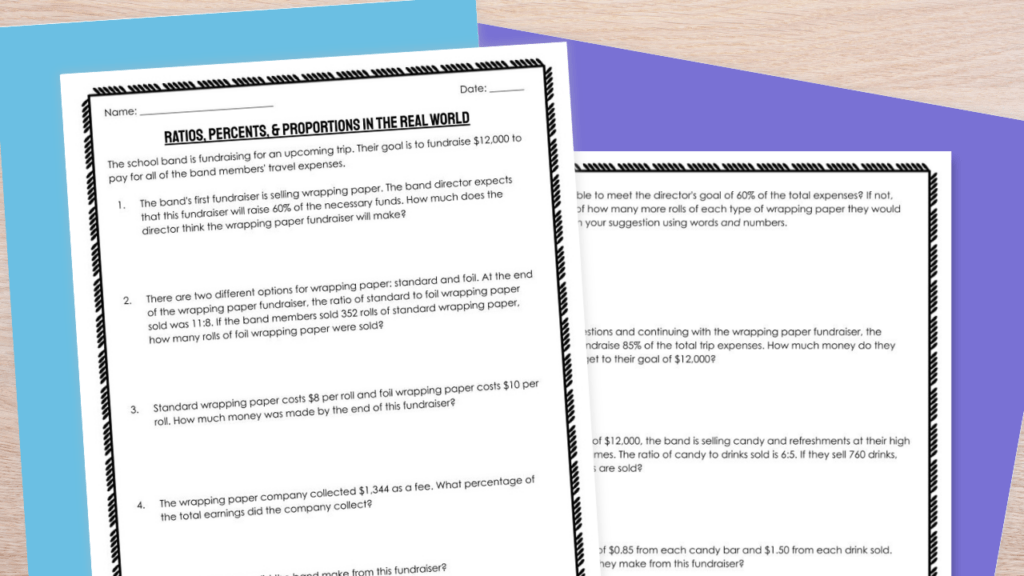
In this real world application, the school band is raising money for their annual trip. They are conducting two fundraisers to reach their goal and need help determining how to get the most bang for their buck. From this scenario, your students will write ratios and proportions based on the information given to help the band members reach their fundraising goal.
Warm Ups & Exit Tickets
Real-world math doesn’t always have to mean elaborate projects. Sometimes all you need are quick, targeted opportunities to check understanding.
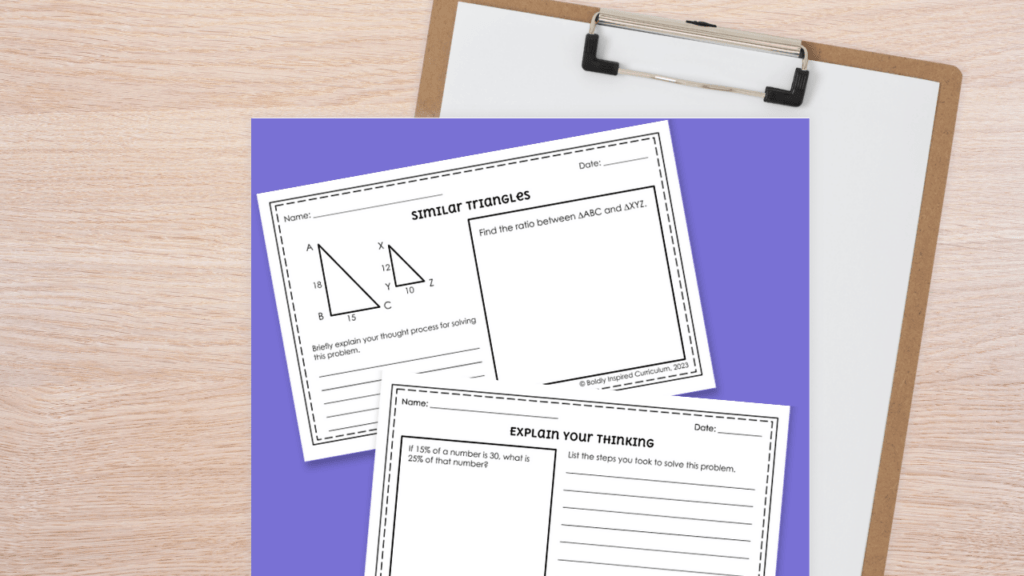
One of my favorite low-prep options is my Ratios, Proportions, and Percents Warm-Up & Exit Ticket Set.
These exit tickets are designed to help teachers:
- Reinforce real-world examples in bite-sized practice
- Give students daily exposure to critical thinking
- Quickly assess understanding without grading overload
Because every prompt is short and targeted, you can use these as bell ringers, exit tickets, stations, or even short assessments.
Final Thoughts About Connecting Ratios, Proportions, and Percents to Real Life
The more students see ratios, proportions, and percents woven into their everyday lives, the more confident they become with problem-solving. The best part? You don’t have to create every example yourself.
Ask your students to bring in real-world examples like screenshots of receipts, discounts, recipes, game stats, or photos they notice during the week. You’ll be amazed at how quickly they start spotting math everywhere.