
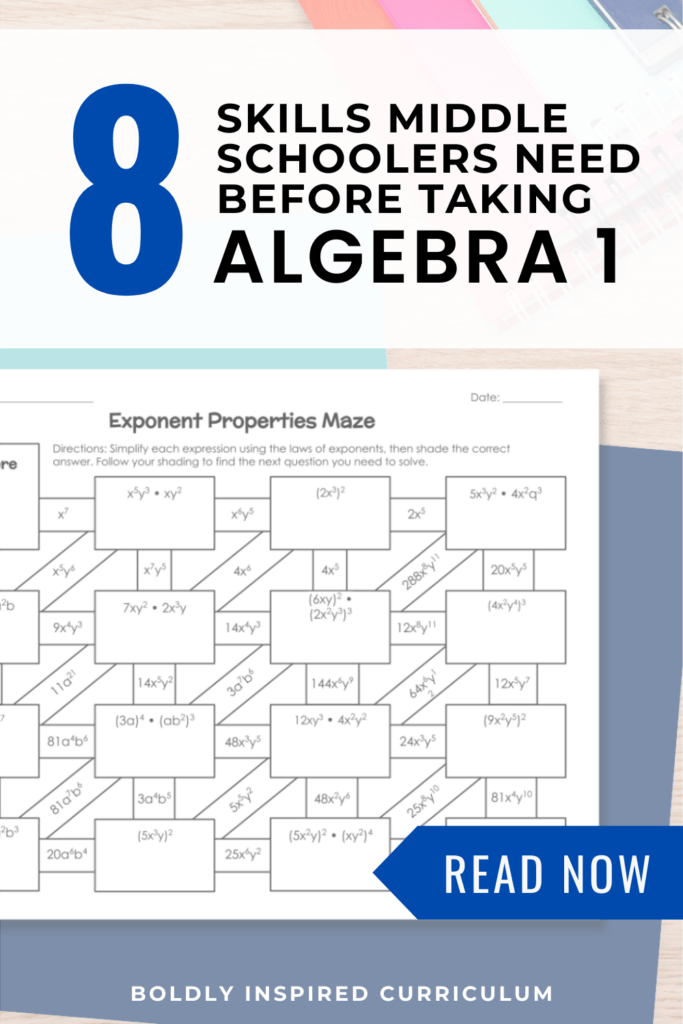
Algebra 1 has a reputation and not always a good one. For many students, it’s the first time math starts to feel truly difficult. Concepts become more abstract, problems require multiple steps, and the margin for error feels smaller. Here’s the part that often gets overlooked: most Algebra 1 struggles don’t actually start in Algebra 1. They start earlier. When students walk into Algebra 1 without a strong foundation in key middle school math skills, even well-designed lessons can feel overwhelming. But don’t worry, these gaps are easily predictable and fixable. If you want your students to feel more confident and capable in Algebra 1, these are the 8 essential middle school math skills worth strengthening before the course begins.
1. Operations with Fractions
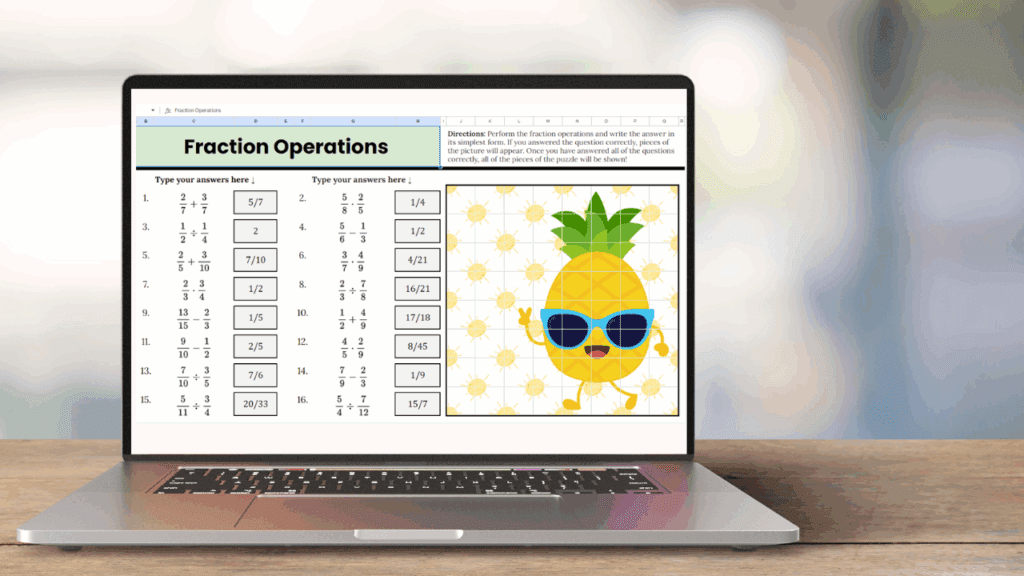
Fractions tend to be one of the biggest roadblocks for students heading into Algebra 1. Students should be comfortable adding, subtracting, multiplying, and dividing fractions including working with unlike denominators. In Algebra 1, fractions show up everywhere: solving equations and inequalities, writing and graphing linear equations, and simplifying algebraic expressions.
When students struggle with fraction operations, their focus shifts away from the algebraic concept and onto basic computation, which slows everything down. I love assigning fraction activities as sub plans because I know my students will always need the practice and shouldn’t have too many questions. Here’s one of my favorite activities for fraction operations ⬇️
2. Working with Integers
Positive and negative numbers are foundational in Algebra 1, especially when solving equations and simplifying expressions. Students need a solid understanding of adding, subtracting integers, multiplying and dividing integers and recognizing how negatives affect outcomes. Being able to do mental math and having strong number sense will make other Algebra 1 topics come more naturally.
Common mistakes like forgetting that a negative times a negative is positive can derail otherwise correct work. This skill becomes especially important when students begin solving multi-step equations or graphing on a coordinate plane.
3. Order of Operations
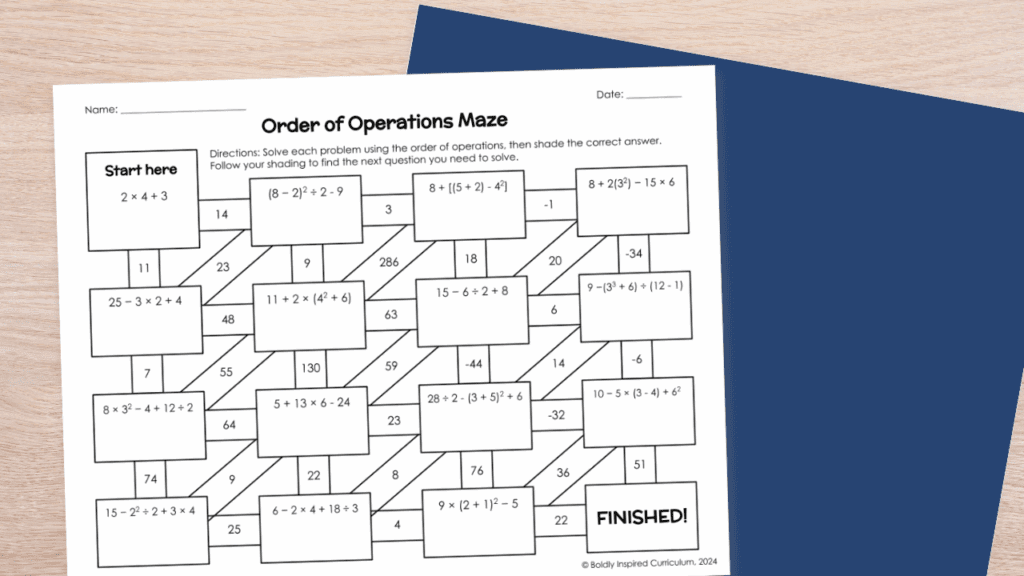
Order of operations goes beyond just “PEMDAS.” Students need to understand why the order matters and how to apply it consistently, especially when expressions become more complex. This includes working with parentheses, exponents, and multiple operations in one expression.
In Algebra 1, students regularly evaluate and simplify expressions with variables, and any confusion with order of operations can lead to incorrect solutions.
4. Simplifying Expressions
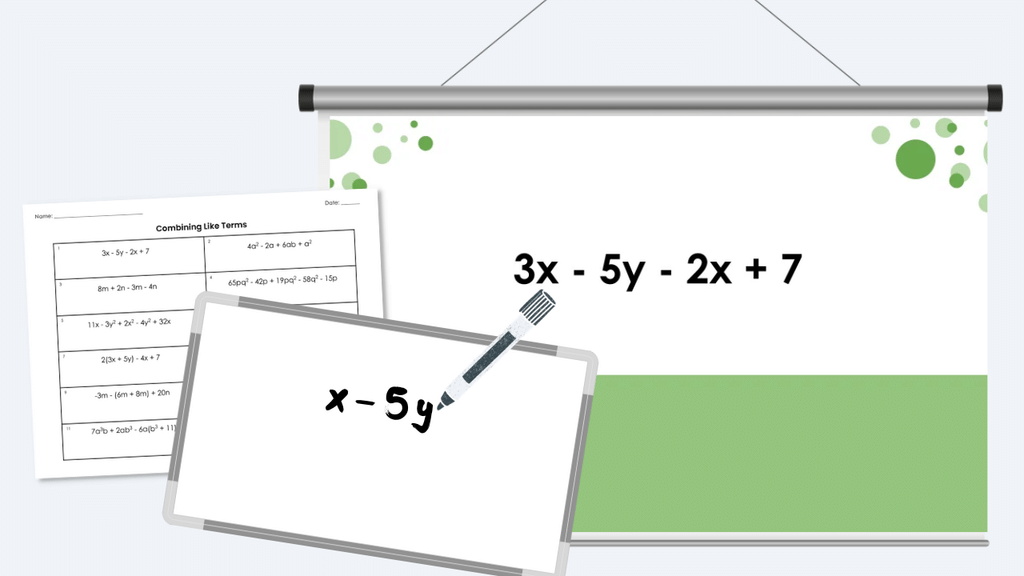
One of the biggest conceptual shifts in Algebra 1 is simplifying expressions and applying the same properties to more complex problems. Students need to understand the distributive property and combining like terms, so that they can solve multi step equations and simplify polynomial expressions.
5. One-Step Equations
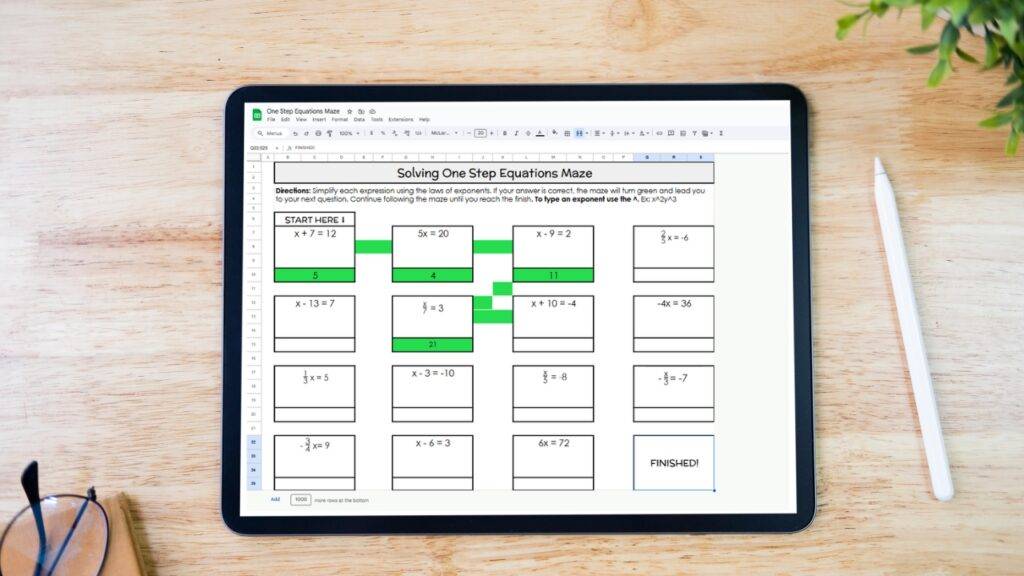
Before students can confidently solve multi-step equations, they need a strong grasp of one-step equations. This includes solving equations like:
- x + 5 = 12
- 3x=15
More importantly, students should understand why they’re performing each step instead of just memorizing what to do. This builds the foundation for inverse operations, which is a core concept in Algebra 1.
6. Ratios and Proportions
Proportional relationships play a major role in Algebra 1, especially when students begin writing and graphing linear functions.
Students should be able to:
- Recognize equivalent ratios
- Solve proportions
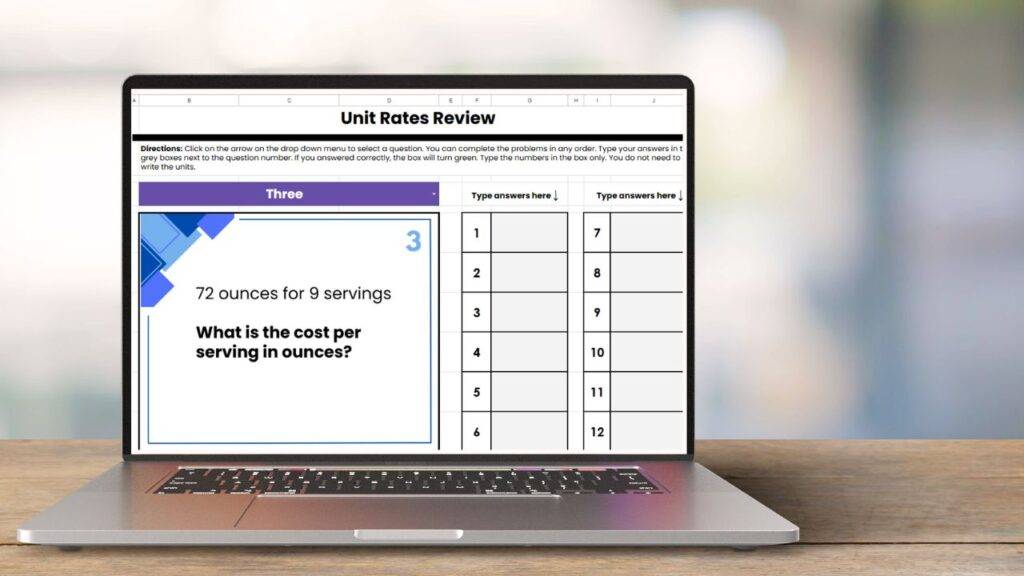
- Understand unit rates
These skills connect directly to slope, rate of change, and real-world applications like speed, cost, and scaling.
7. Basic Graphing Skills
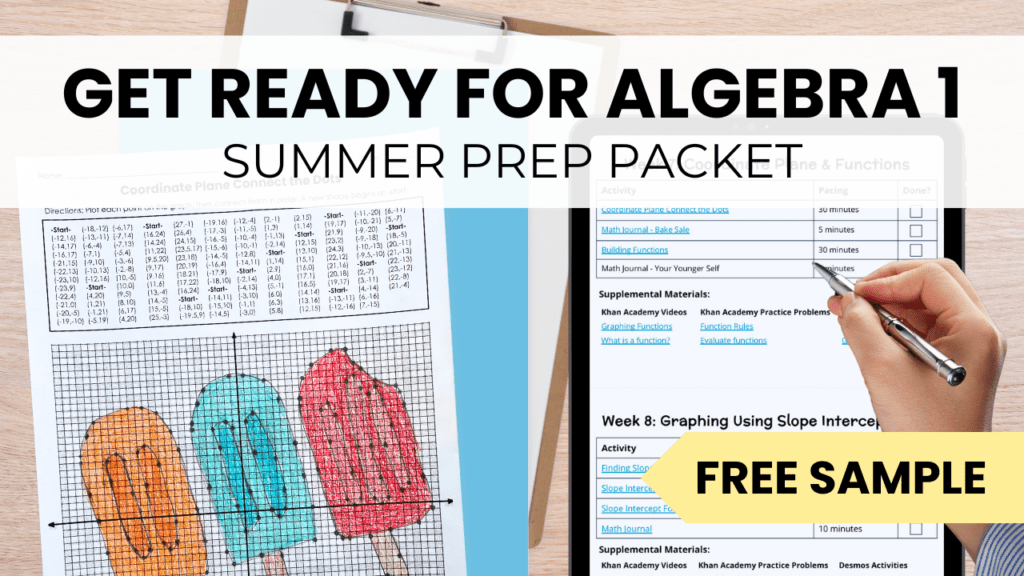
Graphing is a key part of Algebra 1, and students need to start the school year with a basic understanding of the coordinate plane. They should be able to plot points accurately, understand the meaning of ordered pairs, and graphing from tables. Hopefully, students have seen slope-intercept form and understand the concept of slope, but it’s okay if they haven’t mastered this quite yet!
8. Exponents (Basics)
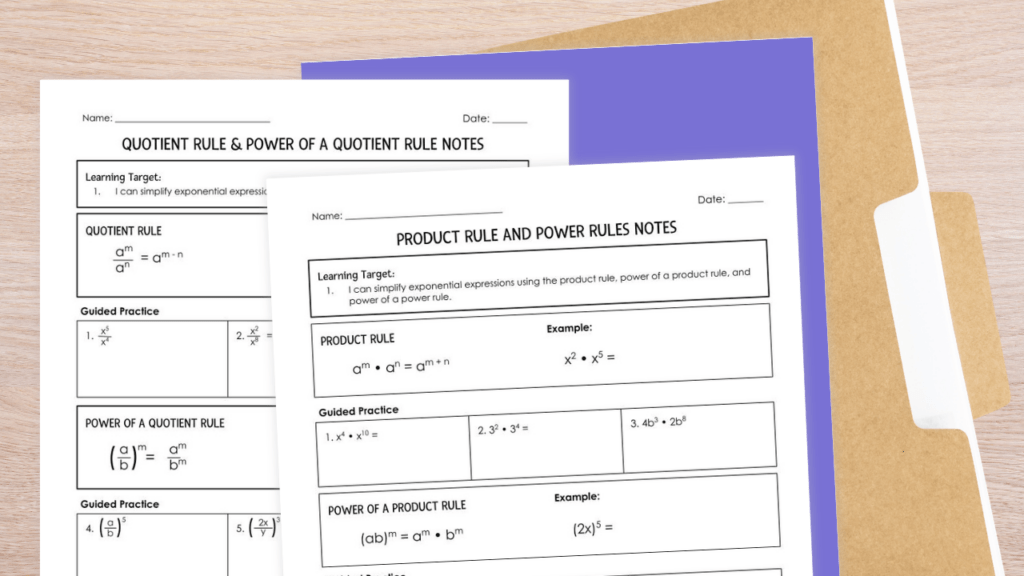
Students don’t need to master complex exponent rules before Algebra 1, but they do need a solid understanding of the basics.
This includes:
- Understanding what an exponent represents
- Evaluating expressions with exponents
- Avoiding common mistakes (like multiplying the base and exponent)
These skills become increasingly important as students work with exponential expressions later in the course.
How to Tell If a Student Is Ready for Algebra 1
Not every student will enter Algebra 1 with complete mastery of all eight of these middle school math skills and that’s completely normal. Readiness is less about perfection and more about how students approach learning and problem solving.
Students who are prepared for Algebra 1 can typically work through multi-step problems with some level of independence, even if they make occasional mistakes. They tend to show persistence when faced with challenges, rather than immediately shutting down or giving up.
On the other hand, there are some clear signs that a student may need additional support before or during Algebra 1. Students who struggle with basic operations (especially fractions and integers) often find it difficult to keep up once algebraic concepts are introduced.
Another common indicator is an overreliance on memorized steps without understanding why those steps work. These students may perform well on familiar problems but become stuck when a question is presented in a slightly different way. You may also notice a lack of confidence or a tendency to disengage quickly when problems feel unfamiliar. Recognizing these patterns early allows you to provide more support before their frustration builds.
How to Build These Middle School Math Skills Before Algebra 1
The goal isn’t to go back and reteach an entire middle school curriculum. Instead, the focus should be on strengthening the most essential middle school math skills in a way that feels manageable and sustainable for both you and your students.
One of the most effective approaches is incorporating spiral review, where key concepts are revisited regularly in small doses. This helps students retain what they’ve learned without needing large, time-consuming review units.
Consistency matters more than intensity. Short, focused practice opportunities, including warm-ups, bell ringers, or quick review activities, can have a much bigger impact than a few occasional long review sessions.
It’s also important to give students opportunities to apply their skills in meaningful ways. Building in opportunities for students to explain their thinking helps deepen their understanding and reveals gaps that might otherwise go unnoticed.
Set Your Students Up for Success
Algebra 1 doesn’t have to feel like a struggle for you or your students. When students walk in with a stronger foundation, they’re more confident, more willing to participate, and better able to handle new challenges. And as a teacher, that changes everything about how your class feels.
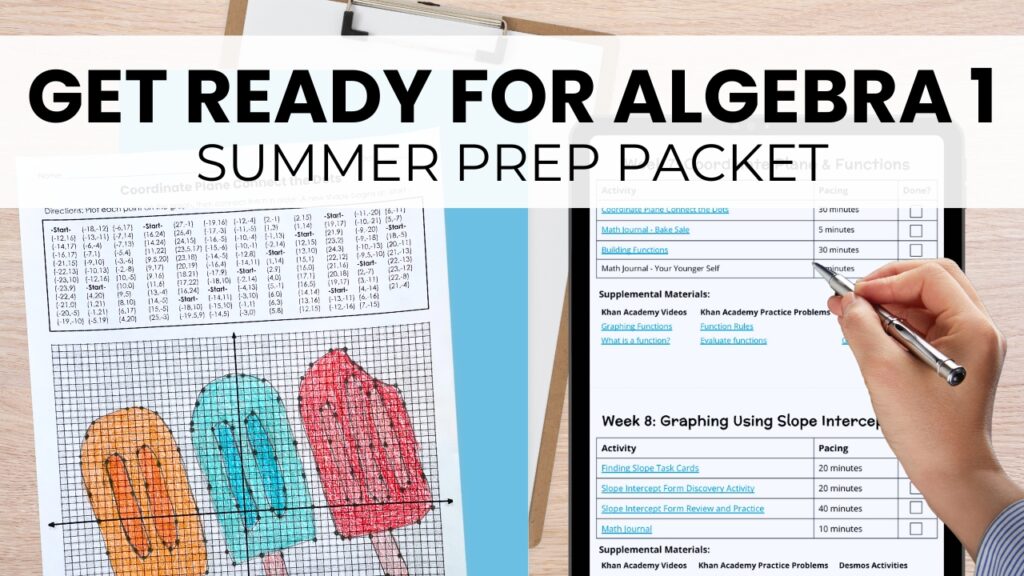
If you want an easy way to help your students review and strengthen these middle school math skills, you can grab a free sample of my Algebra 1 Summer Prep Packet. It’s designed to target the exact areas students need before the school year begins, with a mix of review, problem-solving, and real-world application.
It’s a simple way to give your students a head start and make those first few weeks of Algebra 1 a whole lot smoother.