
If your child is taking Algebra 1, chances are you’ve already seen the frustration that can come with math homework. One minute they’re confident, and the next they’re staring at their algebra problems saying, “I don’t get it.” For many families, algebra homework can quickly turn into nightly stress and tension.
What makes it even harder is that “stuck” can look different for each student. Some students freeze before they even begin while others start confidently but get lost halfway through a problem.
You do not need to be a math expert to help your child succeed in Algebra 1. In fact, the most helpful support often has less to do with solving the algebra problems yourself and more to do with helping your child think through the process independently and teaching them how to use their resources.

Start by Understanding Where They’re Stuck
Before jumping in with explanations or answers, try to figure out what kind of help your child actually needs. Students can struggle with algebra problems for very different reasons.
Sometimes they do not fully understand what the question is asking. Word problems, unfamiliar vocabulary, or multi-step directions can make students feel overwhelmed before they even begin.
Other times, they understand the concept but do not know how to start. This is especially common in Algebra 1 because students are learning how to apply multiple skills at once.
Some students can begin correctly but make mistakes somewhere in the middle of the process. They may lose track of signs, skip steps, or make small arithmetic errors that lead to the wrong answer.
Instead of immediately explaining the problem, try asking questions that help them think through it:
- “What do you know so far?”
- “What is the problem asking you to find?”
- “Can you point to the part that feels confusing?”
- “What have you already tried?”
- “Does this problem remind you of another one you’ve done before?”
These types of questions encourage problem-solving and help students build independence instead of relying on someone else to rescue them every time they get stuck.
Focus on the Process, Not Just the Answer
One of the biggest misconceptions about math is that getting the correct answer is the only thing that matters. In reality, understanding the process is far more important.
A student who guesses correctly without understanding the steps will likely struggle when the algebra problems become more challenging later on. On the other hand, a student who makes a mistake but can explain their thinking is often much closer to true understanding.
Encourage your child to talk through their reasoning out loud. Even if they are unsure, verbalizing their thinking can help them identify where they became confused. For example, imagine your child is solving a two-step equation and gets the wrong answer.
An unhelpful response might sound like:
“You did that wrong. Here’s how you’re supposed to do it.”
A more helpful response could be:
“Walk me through what you did here. Why did you choose that step?”
That small shift changes the focus from simply correcting mistakes to helping your child develop critical thinking and confidence.
Use Simple Strategies to Break Down Algebra Problems
When students feel overwhelmed, it helps to simplify the algebra problems into smaller, manageable pieces. Math becomes much less intimidating when students learn to tackle one step at a time.
One helpful strategy is rewriting the problem neatly. Sometimes students become confused simply because their work is disorganized or difficult to follow.
Another useful approach is identifying what is known and what is unknown. In word problems especially, students often benefit from highlighting important information and clearly identifying what they need to solve for.
Encourage your child to slow down and work step-by-step instead of trying to do multiple operations mentally at once. Writing each step clearly can prevent careless mistakes and make it easier to catch errors later.
Finally, remind them to check their work. In Algebra 1, students can often substitute their answer back into the original equation to see whether it makes sense. This builds accuracy and reinforces understanding.
Avoid Common Parent Mistakes
Helping with math homework can be tricky, especially if algebra was taught differently when you were in school. Even with the best intentions, some common habits can accidentally make things more stressful for students.
One of the biggest mistakes is jumping in too quickly. When parents immediately take over, students lose the opportunity to struggle productively and build perseverance.
Another challenge happens when parents teach a completely different method than the teacher uses in class. While your method may work, switching strategies mid-assignment can confuse students even more. If possible, encourage your child to reference class notes, examples, or teacher videos first.
It is also important to avoid negative comments about math, even joking ones like:
“I was never good at math either.”
While these statements may seem harmless, students often internalize them and begin believing that math ability is fixed instead of something they can improve with practice.
Finally, try not to focus only on speed or correctness. Algebra is a skill-building process. Students need time to think, make mistakes, revise their work, and develop understanding.
Appreciate the Small Wins
Confidence plays a huge role in math success. Many students who struggle in algebra begin to assume they are simply “bad at math,” which can quickly affect motivation and effort. One way to rebuild confidence is to start with easier algebra problems before moving into more difficult ones. Success on smaller tasks can help students feel more capable and willing to keep trying.
It also helps to celebrate progress instead of perfection. Maybe your child remembered to show all their steps today, caught a mistake independently, or stayed calm through frustrating algebra problems. Those wins matter.
Encouraging persistence is especially important in Algebra 1 because students are learning entirely new ways of thinking. Struggle is not a sign that they are failing. Often, it is a sign that real learning is happening.
When to Seek Extra Help
Sometimes students need additional support beyond what can realistically happen at home, and that is completely okay. I always tell my students that if their math homework is taking more than 30 minutes to complete, then they need to take a break and ask for help in class tomorrow. I don’t want my students going home and struggling through work or doing it all wrong without realizing it because that will just lead to extra frustration. Sometimes the best thing a parent can do is help their child advocate for their needs at school.
A few signs your child may need extra help include:
- Consistently failing quizzes or tests
- Extreme frustration or anxiety around math
- Difficulty understanding lessons even after reviewing notes
- Avoiding homework altogether
- Falling behind on foundational skills
If you notice these patterns, consider reaching out to your child’s teacher first. Teachers can often identify specific skill gaps and recommend targeted support.
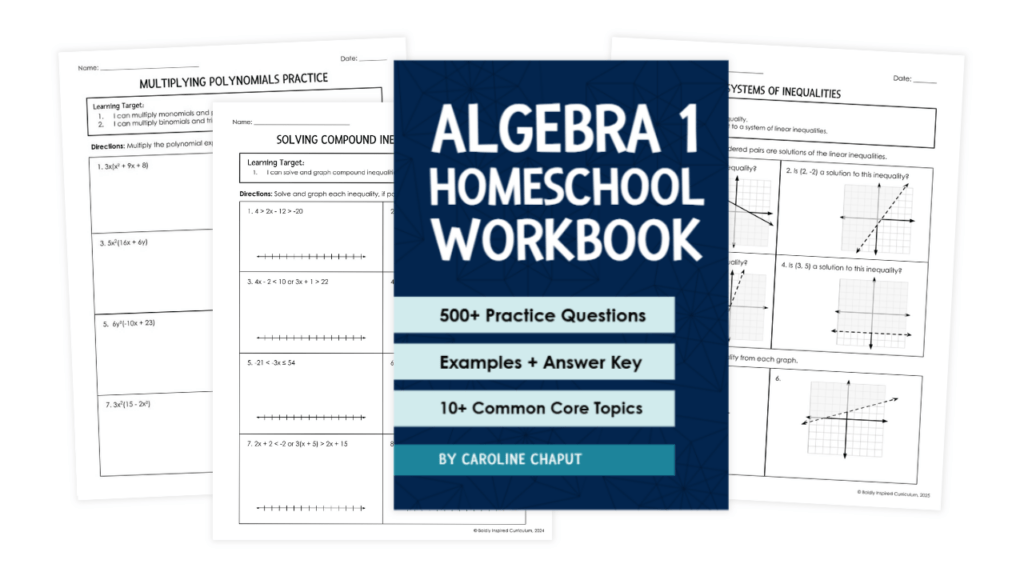
Tutoring can also be helpful, especially when students need individualized instruction or accountability. In addition, many online resources now offer videos, guided practice, and step-by-step explanations students can revisit at their own pace. If you’re looking for more practice problems for your child taking Algebra 1, check out my Algebra 1 workbook ⬇️
Making Math Less Stressful at Home
A calm homework environment can make a bigger difference than many parents realize. Try establishing a consistent homework routine with a regular time and distraction-free workspace. Predictability helps students mentally prepare for challenging tasks.
It is also helpful to keep the atmosphere calm, even when frustration shows up. If emotions are escalating, taking a short break is often more productive than forcing a student to push through while upset.
Most importantly, normalize struggle as part of learning. Algebra is difficult because students are developing new problem-solving skills. Reminding your child that confusion is temporary can help reduce anxiety and build resilience over time.
Final Thoughts About Helping Your High Schooler with Their Math Homework
Helping your child with algebra problems does not mean you need to remember every math formula or answer every question perfectly yourself. The most valuable support often comes from asking thoughtful questions, encouraging persistence, and helping your child develop confidence in their own thinking. The goal is not to do the work for them. The goal is to guide them through the learning process so they become more independent problem-solvers over time.