

That first five minutes of class sets the tone for everything that follows including your pacing, expectations, and the overall energy in the room. When students walk in and immediately have something meaningful to do, it eliminates downtime, reduces off-task behavior, and signals that learning starts right away. On the flip side, when a math bell ringer feels repetitive, disconnected, or optional, students pick up on that quickly.
The last thing you want is for your bell ringers to turn into a meaningless task. A strong math bell ringer routine shouldn’t just “fill time.” It builds habits, reinforces key skills, and creates a predictable structure that helps students feel more confident and prepared. If your current warm-ups feel like they’re just checking a box, this is your chance to rethink how those first few minutes can work harder for you.
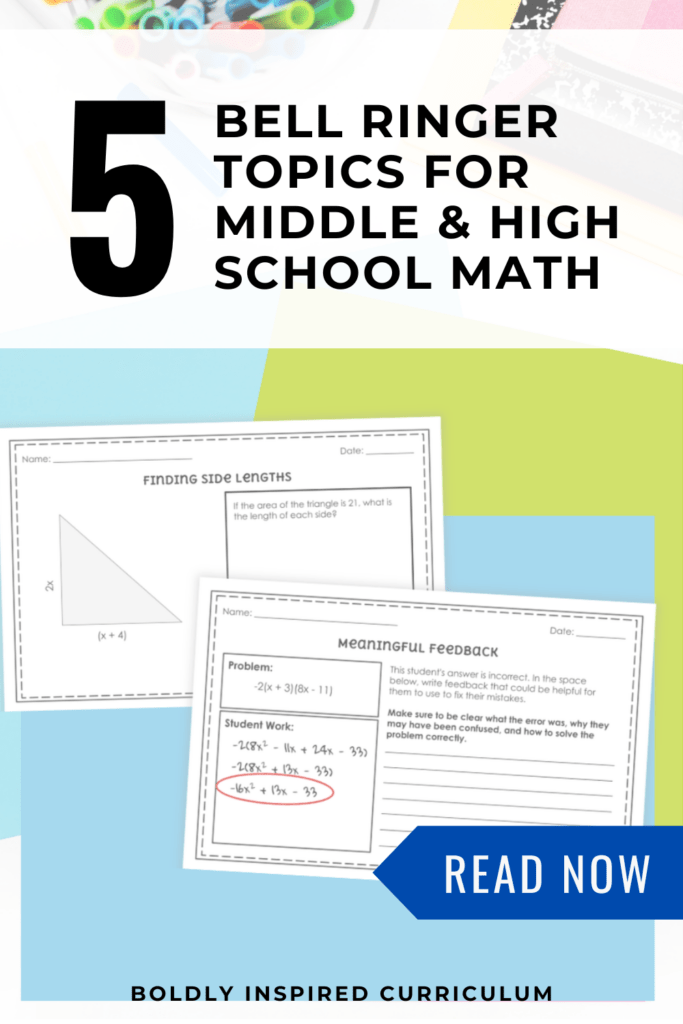
What Makes a Strong Bell Ringer?
A strong bell ringer is intentional. It’s not something you throw together at the last minute—it’s designed to support your larger instructional goals.
Short and focused
Bell ringers should be quick enough that students can get started immediately and make progress within a few minutes. This isn’t the time for multi-step tasks that require extended thinking or multiple parts. Instead, aim for one clear objective. Whether it’s solving a single equation, analyzing one mistake, or responding to a short prompt, the goal is to ease students into math mode without overwhelming them.
Builds routine
When students know exactly what to expect when they walk into the room, it reduces transition time and eliminates the need for repeated directions. Over time, this routine becomes automatic which gives you time to take attendance, check in with students, or prepare for the lesson without constant interruptions.
Reinforces or previews learning
Every math bell ringer should serve a purpose. It can review previously taught material to strengthen retention, or it can preview an upcoming concept to activate prior knowledge. Both approaches are valuable. For example, a quick review problem on solving equations can help students stay fluent, while a preview question about patterns might set the stage for introducing functions.
Math Bell Ringer Topics That Engage Students
Variety matters. When students see the same type of problem every day, even strong routines can start to feel stale. Mixing in different formats keeps engagement high and encourages different types of thinking.
Spiral Review
Spiral review is one of the most effective ways to build long-term retention. Instead of focusing only on the current unit, you bring back previously learned skills in small, manageable doses. This might look like two or three short problems covering different topics. Over time, this consistent exposure helps students retain concepts without needing large review units.
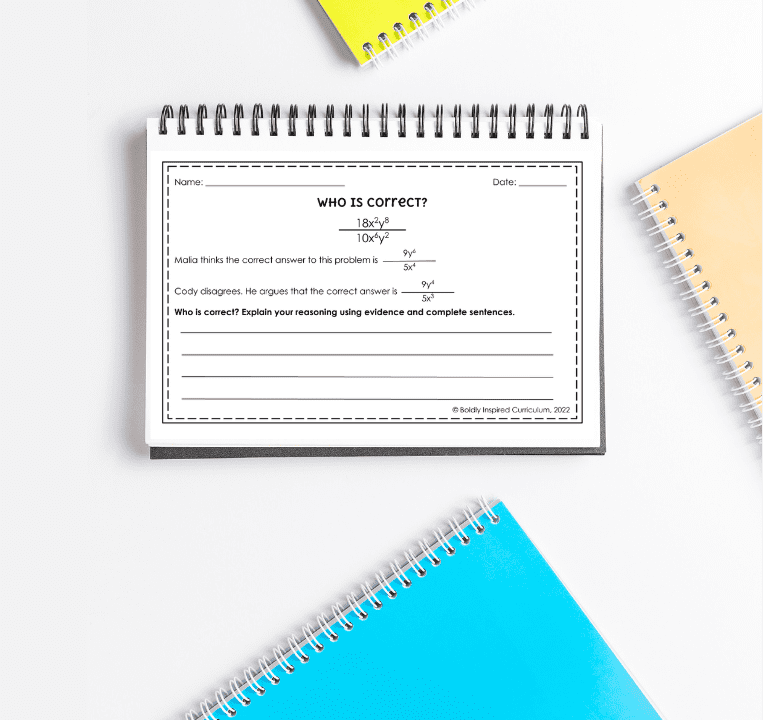
Would You Rather/Which Doesn’t Belong
These prompts are simple but powerful. Students choose between two options and explain their reasoning. You aren’t necessarily looking for a correct answer but rather a strong explanation from your students. This builds mathematical communication skills and encourages students to think more deeply about strategies and efficiency.
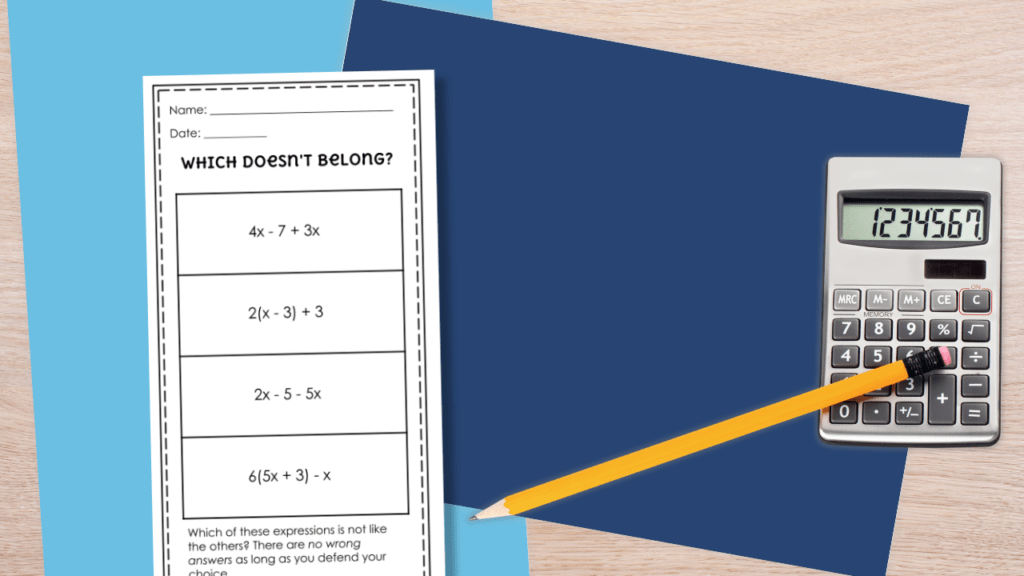
Error Analysis
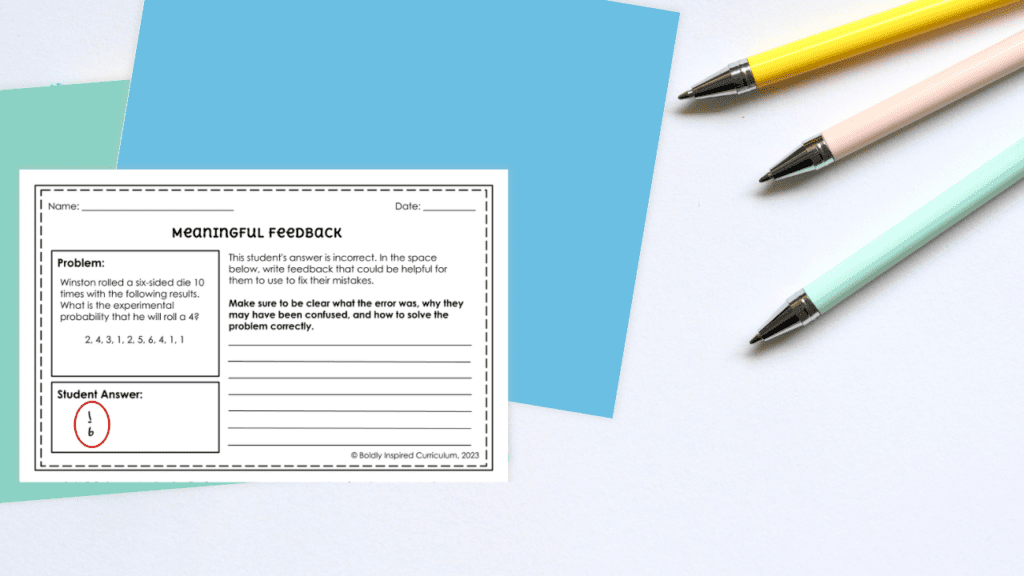
Students often learn more from mistakes than from correct solutions. Present a worked-out problem with an error and ask students to identify and correct it. This pushes them to analyze the process rather than just focus on the final answer. It also helps normalize mistakes as a part of learning.
Number Talks
Number talks focus on mental math and strategy sharing. You present a problem, give students time to think, and then discuss different approaches. This builds flexibility in thinking and helps students see that there are multiple ways to solve the same problem.

Real World Scenarios
Connecting math to real-life situations increases relevance and engagement. A short scenario like comparing prices, analyzing data, or interpreting a situation can make math feel more meaningful.
Weekly Math Bell Ringer Routine Ideas
One of the biggest challenges with bell ringers is consistency. It’s easy to start strong and then run out of ideas or time. Creating a weekly structure can solve that problem.
Monday: Review
Start the week by revisiting key concepts from the previous week. This helps students transition back into learning mode and reinforces important skills. It also gives you a quick snapshot of what students remember.
Tuesday: Problem-Solving
Use this day for slightly more open-ended tasks. These problems might require multiple steps or different strategies, encouraging students to think more deeply. It’s a great way to build perseverance.
Wednesday: Error Analysis
Midweek is a perfect time to slow down and focus on understanding. Error analysis encourages students to think critically and identify misconceptions before they become habits.
Thursday: Discussion Prompt
Incorporate prompts that require explanation, justification, or comparison. This could be a “Which Doesn’t Belong” question or a short written response. The goal is to get students talking and thinking beyond computation.
Friday: Challenge or Reflection
End the week with something different. A challenge problem can push students to apply their learning in a new way, while a reflection can help them think about what they’ve learned and where they still have questions.
This structure keeps your routine predictable while still offering variety, making it easier to plan and more engaging for students.
Making Bell Ringers More Than Busy Work
The difference between a meaningful math bell ringer and busy work often comes down to how it’s used.
Require explanation or justification
Even a short written explanation can deepen understanding. When students explain their reasoning, they’re forced to think more carefully about their process. This also gives you insight into their thinking.
Encourage discussion
Bell ringers don’t have to be silent. Quick partner discussions or whole-class share-outs can bring energy into the room and allow students to learn from each other. It also helps build a classroom culture where ideas are valued.
Connect to lesson goals
Make the purpose clear. When students understand how the bell ringer connects to the day’s lesson, they’re more likely to take it seriously. It also helps create a smoother transition into your main instruction.
Student accountability
Students are more likely to take a math bell ringer seriously when they know their work matters. This could include collecting responses, checking notebooks, or using participation points. The goal is to create a sense of responsibility without adding unnecessary grading.
Final Thoughts About These Math Bell Ringers Topics
Bell ringers might seem like a small part of your lesson, but they can have a big impact over time.
When used intentionally, they build consistency, strengthen skills, and create a classroom environment where students are ready to think from the moment they walk in. More importantly, they help students develop habits like persistence, reasoning, and communication that extend beyond a single lesson.
You don’t need to completely overhaul your routine to see results. A few thoughtful adjustments can turn those first five minutes into one of the most valuable parts of your class.