
If you’ve ever had a student ask, “When am I ever going to use this?” you’ll want to keep reading. Helping students see that math is more than just procedures and right answers is one of the biggest challenges in secondary math classrooms. All students need to do to get the right answer now is type a problem into Google or take a picture of it with PhotoMath. They’ll get immediate answers and each step it takes to solve the problems. This is where performance tasks in math class take a typical practice worksheet and turn it into something meaningful. They shift the focus from memorizing steps to actually thinking, problem-solving, and making sense of math in real situations. And when done well, they can completely change how students engage with your class.
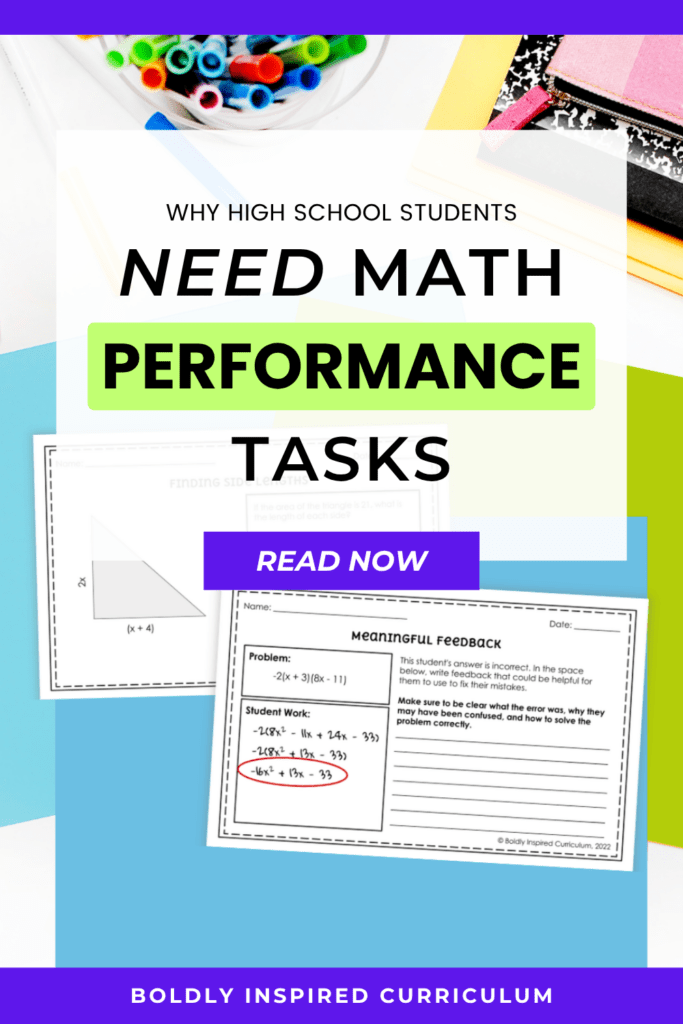
What Is a Performance Task in Math?
A performance task in math class is a real-world, open-ended problem that requires students to apply what they’ve learned in a meaningful way. Instead of following a set of steps, students have to decide what math processes to use, how to approach the problem, and ultimately justify their thinking.
These aren’t your typical word problems. Performance tasks are intentionally designed to feel messy, but in a good way. There’s often more than one valid approach, and sometimes even more than one reasonable answer. The goal isn’t always just to get to a solution, but to make sense of the process along the way.
Why Performance Tasks Matter
Performance tasks push students beyond surface-level understanding. Instead of asking, “Can you solve this?” they ask, “Do you understand what you’re doing and why?”
When students engage in this kind of thinking, they start to build real problem-solving skills. They’re using math instead of just practicing it. That shift alone can increase engagement, especially for students who struggle to connect with traditional instruction.
Performance tasks also naturally encourage collaboration. Students talk through ideas, challenge each other’s thinking, and refine their approaches. Seeing and understanding different perspectives in math class makes students more well-rounded in their own thinking.
The Skills Students Actually Develop
When you bring performance tasks into your math classroom, you’re helping students develop skills that go far beyond a single standard.
Students learn how to reason through complex situations instead of trying to find shortcuts. They practice justifying their answers, which strengthens both their understanding and their confidence.
Over time, you’ll also notice an increase in perseverance. Students become more willing to stick with challenging problems because they’re used to not having everything handed to them upfront.
How to Implement Performance Tasks in Math Class Without Overwhelm
You don’t need to completely overhaul your teaching to get started. Begin with one performance task at the end of a unit. This gives students a chance to pull everything together and apply what they’ve learned.
Scaffolding is key. Provide guiding questions or checkpoints to support students without taking away the thinking process. The goal is to help them move forward, not to lead them step-by-step.
Group work can also make these tasks more manageable. When students collaborate, they share the cognitive load and learn from each other in the process.
And don’t skip the debrief. Take time to discuss different approaches, highlight strong reasoning, and connect the task back to the math concepts.
When to Use Performance Tasks in Math Class
Performance tasks work especially well at the end of a unit, when students are ready to apply multiple skills at once. They’re also powerful during review periods, giving students a more meaningful alternative to traditional review packets.
You can even use them after introducing a key concept, as a way to deepen understanding rather than just practice it. The flexibility is part of what makes them so valuable.
If you love the idea of performance tasks in math class but don’t have the time to create them from scratch, I’ve got you covered. These activities are designed to get students thinking, problem solving, and actually using math instead of just going through the motions.
The best part? They’re structured in a way that keeps students engaged without you having to over-explain or constantly redirect.
Here are a few ready-to-use options:
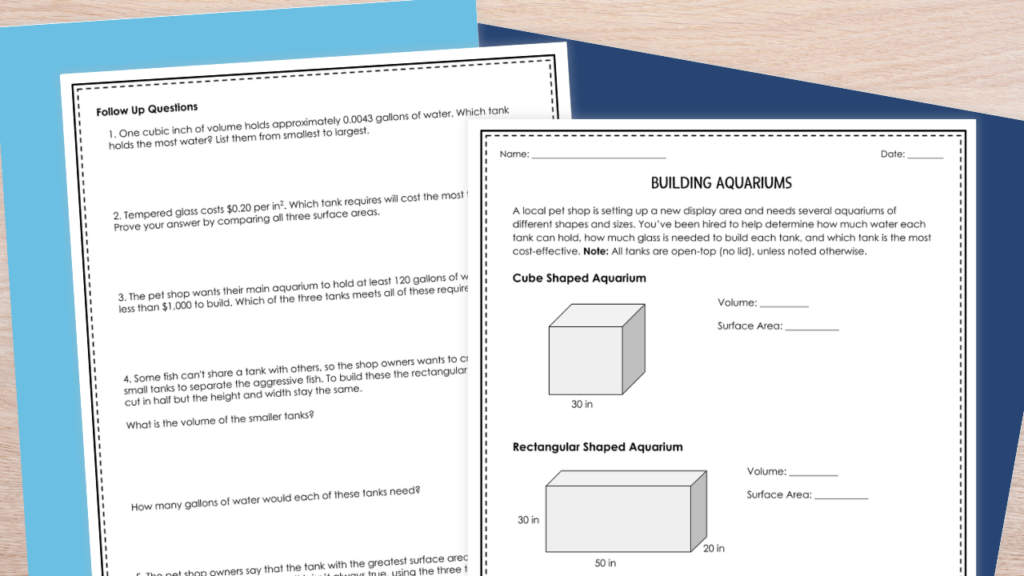
This Surface Area & Volume Performance Task challenges middle school students to find the surface area and volume of rectangular prisms and cylinders to help a pet store create new fish tanks. They will use their calculations to determine how much water will fill each tank and how much glass needs to be used to construct each aquarium.
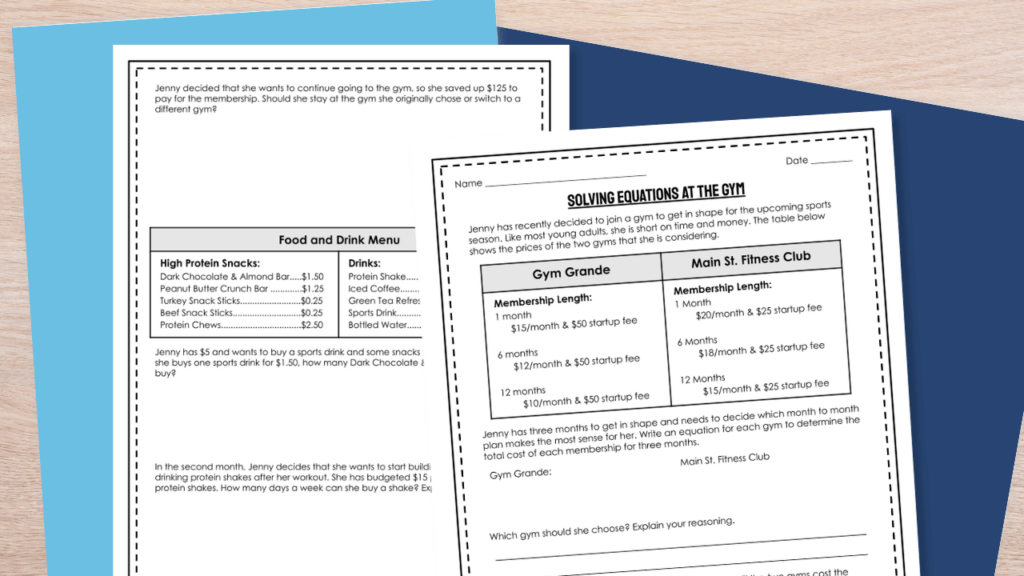
This Multi-Step Equations Activity tasks students with helping Jennie add a new gym membership to her budget. Students will write and solve various equations based on the cost and time constraints she has given.
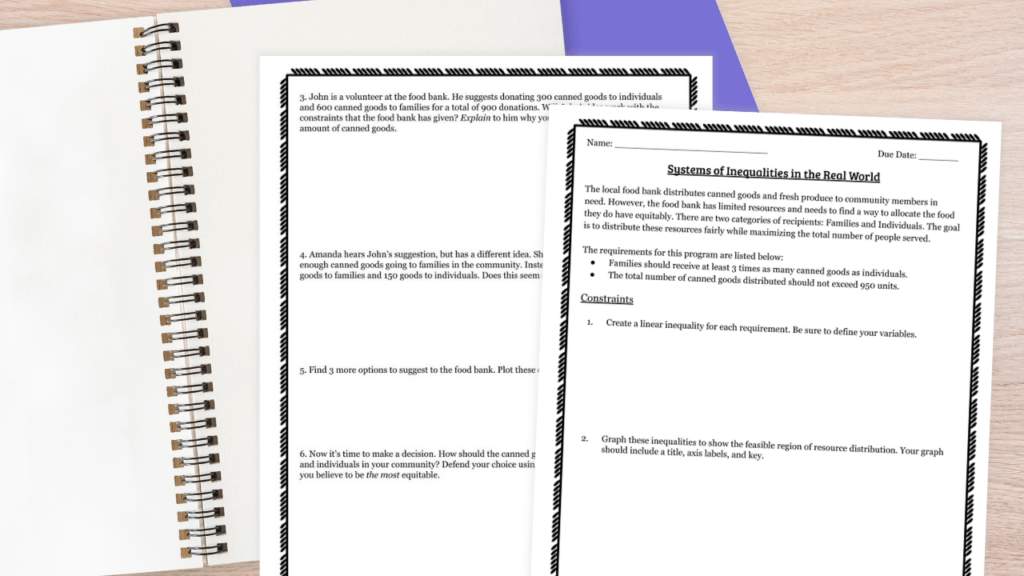
This Systems of Linear Inequalities Performance Task enlists students to help a local food bank use the given constraints to distribute their resources equitably. They will write and graph the linear inequalities, identify possible solutions, and explain which solution makes the most sense for the food bank.
Common Misconceptions About Performance Tasks
One of the biggest misconceptions is that performance tasks in math class replace direct instruction. They don’t. Students still need a foundation of skills and concepts. Performance tasks give them a place to apply and connect that learning. I love assigning performance tasks to introduce a topic to see if my students can work together to solve an unfamiliar problem. From these collaborative discussions, I’m able to see their thought processes then show them the standard algorithm for solving the problems.
Another concern is that these tasks are too difficult for struggling students. In reality, they often provide more access points. Because there isn’t just one “right” way to start, more students can engage with the problem at their own level.
There’s also the idea that performance tasks take too much time. While they do require planning, they don’t have to take over your entire curriculum. Even using just one task per unit can make a noticeable difference.
Final Thoughts About Using Performance Tasks in Math Class
Performance tasks in math class aren’t just an “extra” activity. They’re an essential piece of helping students truly understand math. Math class is becoming more about the problem solving process and less about getting the right answer. Anyone can find the right answer, but not everyone can think critically about a situation, use multiple problem solving strategies, and explain their thinking.