
Math exit tickets have the potential to be really impactful forms of assessment, but sometimes they feel rushed and thrown together for the end of a class period. You ask a quick question, students turn something in on their way out, and… it doesn’t really tell you much. Did they understand the concept? Or did they just follow a procedure?
Maybe you’ve looked at a stack of exit tickets and still felt unsure about what your students actually understood. The goal should be to check for completion and figure out your students’ thought processes. With a few small shifts, exit tickets can become one of the most valuable tools in your classroom.
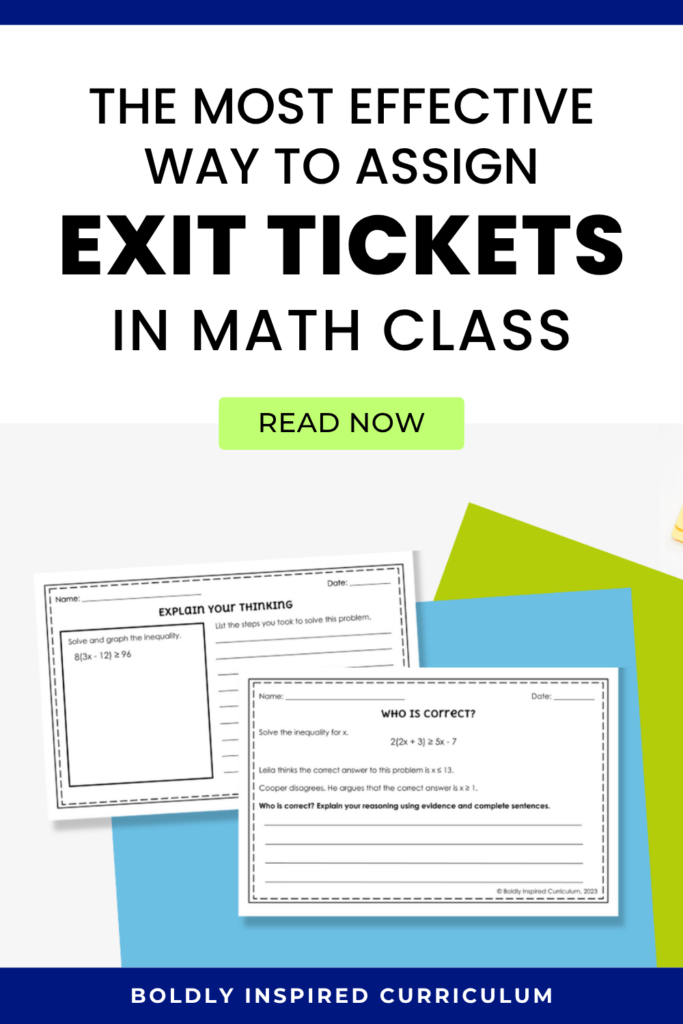
What Makes a Math Exit Ticket Effective
Let’s start with the obvious: an effective exit ticket should be 1-2 questions directly tied to your lesson objective. But here’s the twist that will give you even more insight into what your students really understand: it should require students to think, not just calculate. If a student can complete the task by mimicking steps without understanding why, it’s not giving you the full picture.
Math Exit Tickets That Go Beyond Basic Practice
If you want to see what students really understand, you have to ask better questions. Here are some of my favorite types of questions ⬇️
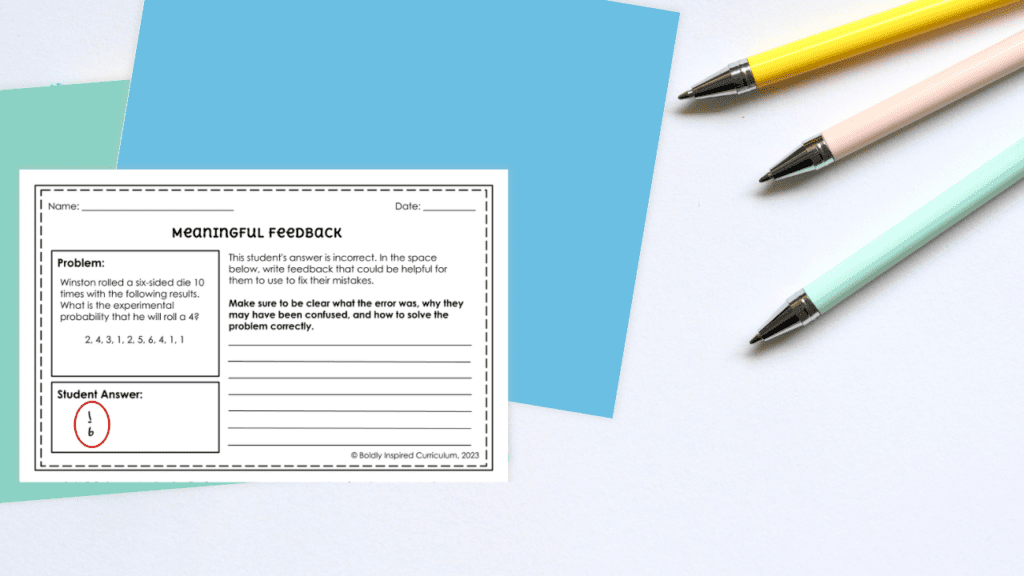
Error analysis
Instead of assigning one more problem to solve, try asking students to analyze a mistake. I always found it interesting how hard of a time my students had with finding an error in student work. It puts into perspective a mistake that seems obvious to some might not be to others because of different problem solving processes.
The most important piece of error analysis questions is giving meaningful feedback to the sample student and showing the correct work. When a student can explain their reasoning, it’s clear that they’re understanding of the concept isn’t just surface level.
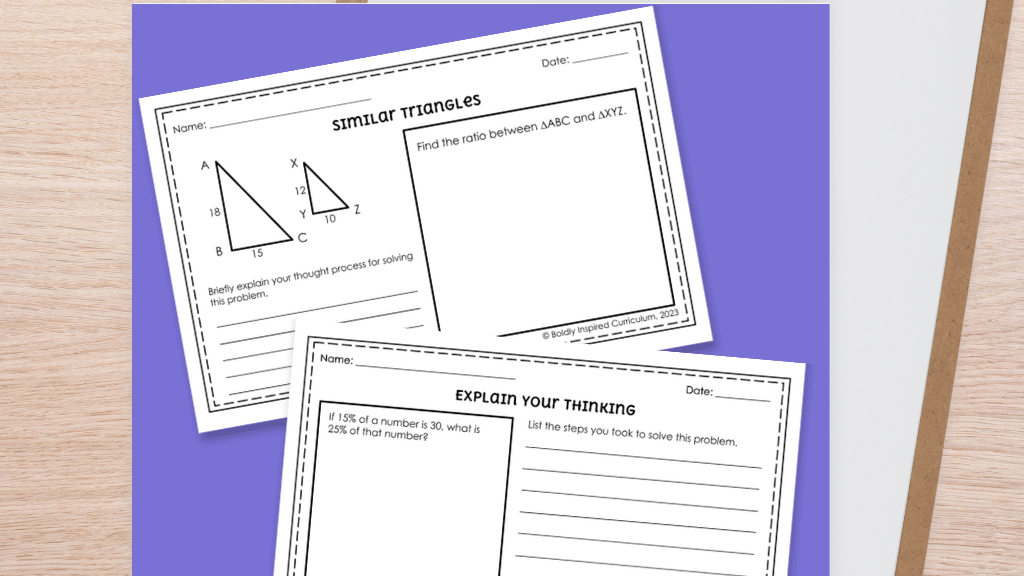
Explain your thinking
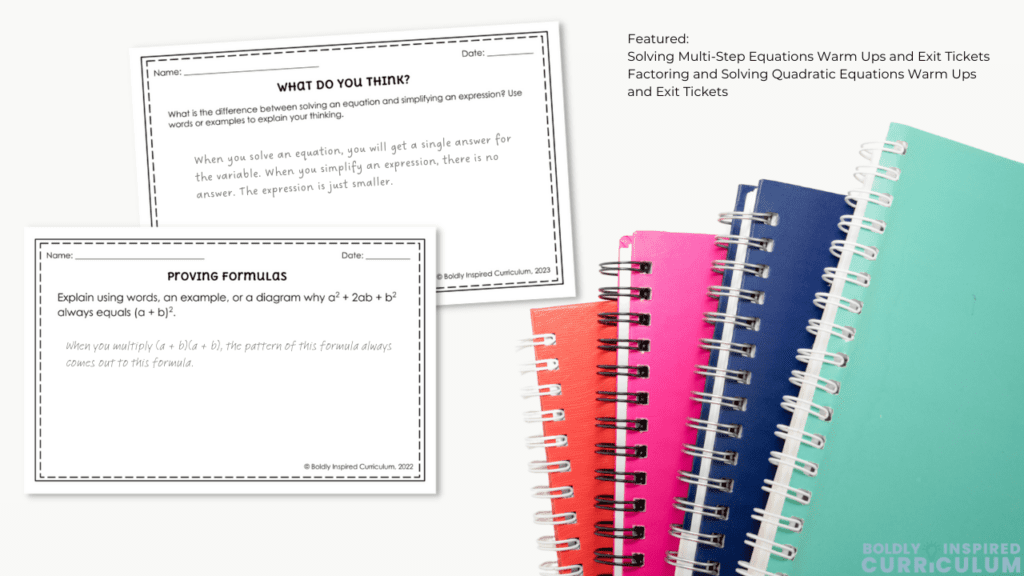
You can also ask students to explain their reasoning or the steps they took to solve the problem. Even a short prompt like “How do you know?” or “Why does this work?” can reveal far more than a correct answer ever will. This simple writing prompt can be easily added to any regular practice problem that you had already planned to assign as an exit ticket.
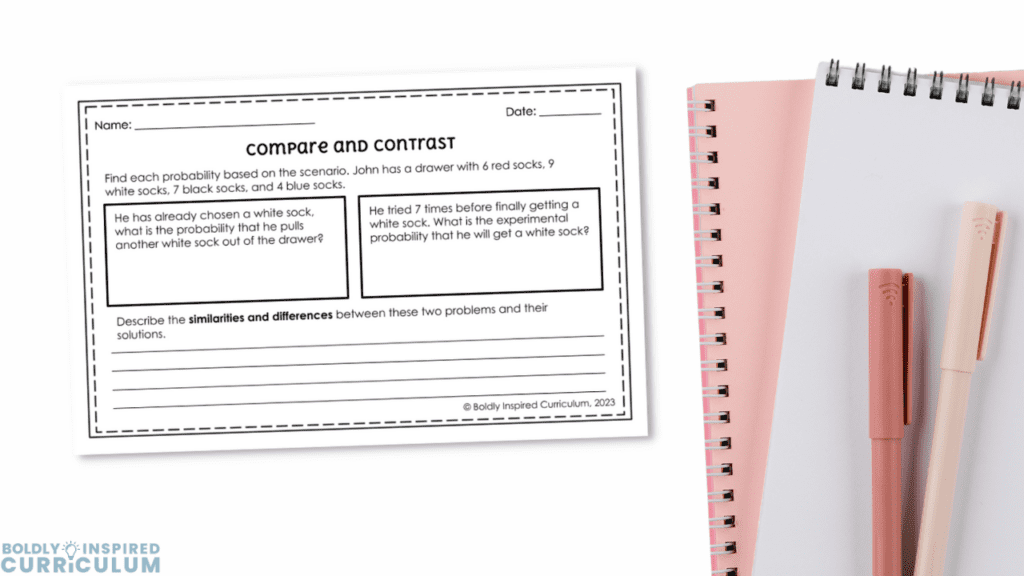
Compare and Contrast
Another meaningful option is having students compare methods or representations. When they decide and explain which approach makes the most sense, they’re engaging in deeper thinking.
Who Is Correct?
These types of questions are similar to error analysis prompts except students are given two options for possible solutions. They will then have to choose which student has the correct answer and explain why. The added step here is asking your students to explain how they know which answer is correct and to identify the mistake in the other answer.
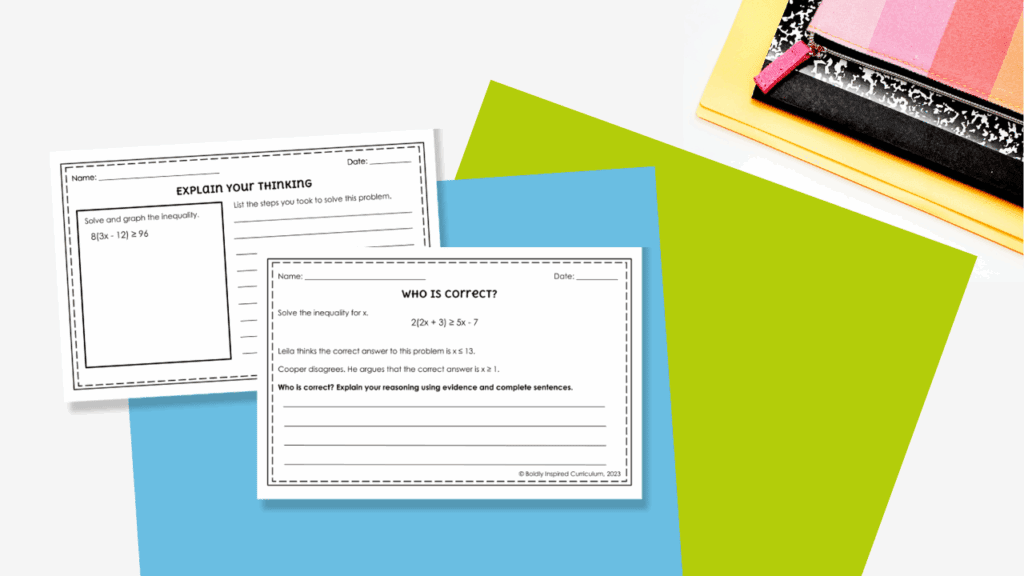
Want Math Exit Tickets Like This Without Creating Them From Scratch?
If you’re reading this and thinking, “This is exactly what I want… but I don’t have time to write these every day,” I put together a free sample of my best selling Algebra 1 writing prompts.
These ready-to-use math warm ups and exit tickets ask questions that go beyond basic practice and actually show you what your students understand.
Inside, you’ll find a variety of prompts designed to get students explaining their thinking, analyzing mistakes, and using multiple problem solving strategies. These are more than just “solve and go” questions. Your students will be challenged to think critically, have meaningful discussions with their classmates, and hone their problem solving skills.
The prompts cover key Algebra 1 topics like equations, inequalities, linear equations in two variables, graphing, exponents, polynomials, and factoring, so you can easily plug them into your existing lessons.
The best part? They’re quick to implement and don’t require extra prep. You can grab a prompt, use it immediately, and get better insight into your students’ understanding by the end of class.
If you want math exit tickets that actually tell you what your students know (without spending hours creating them), you can grab the free sample here ⬇️
How to Actually Use the Data You Collect
The real power of exit tickets comes from what you do after students turn them in. Instead of just marking them right or wrong, look for patterns. Who understands the concept? Who is close but has a misconception? Who is completely lost?
This information can guide your next lesson. You might pull a small group, adjust your pacing, or revisit a concept in a different way. Math exit tickets don’t need to be formal or graded to be effective. In fact, the less pressure attached to them, the more honest and useful student responses tend to be.
Making Math Exit Tickets Sustainable
One of the biggest reasons teachers give up on exit tickets is because they become too much to manage. The key is to keep them simple. One to three well-chosen questions will give you more insight than a full page of problems.
Using consistent structures or templates can also save time. When students know what to expect, they can focus more on the thinking and less on the format. Most importantly, avoid over-grading. Exit tickets are a tool for feedback, not another assignment to add to your gradebook.
Final Thoughts About Effectively Using Exit Tickets in Secondary Math
Math exit tickets don’t need to be complicated to be effective. When you shift the focus from answers to thinking, they become a powerful way to understand what your students actually know.
Small changes like asking for reasoning, analyzing errors, or interpreting results can completely transform the kind of information you get.
At the end of the day, it’s not about whether students can get the right answer in the moment. It’s about whether they understand the math well enough to use it, explain it, and build on it.