Middle school math performance tasks feel different from the typical math assignment. Instead of solving a set of nearly identical problems, students are asked to make sense of a situation first. They have to figure out what the problem is really asking, how the math applies, and then work through it.
These tasks often combine multiple skills in one problem, which means students can’t rely on a single memorized process. They have to think, make decisions, and sometimes try more than one approach. That’s when you’ll be able to see who really understands the math versus who is just following steps.
Middle school students especially need opportunities like this. Many of them can follow along during a lesson, but get stuck when the structure is taken away. These middle school math performance tasks will help build that independence by shifting the thinking back onto the student.
They also make math feel more relevant. When students are working through scenarios that resemble real-life situations, they’re more likely to stay engaged and see a purpose behind what they’re learning. And when they explain their reasoning, you get a much clearer picture of their understanding.
The best part? These don’t have to take a ton of prep or class time. Just one well-placed performance task can spark deeper thinking, better conversations, and more meaningful learning than a full day of traditional practice.
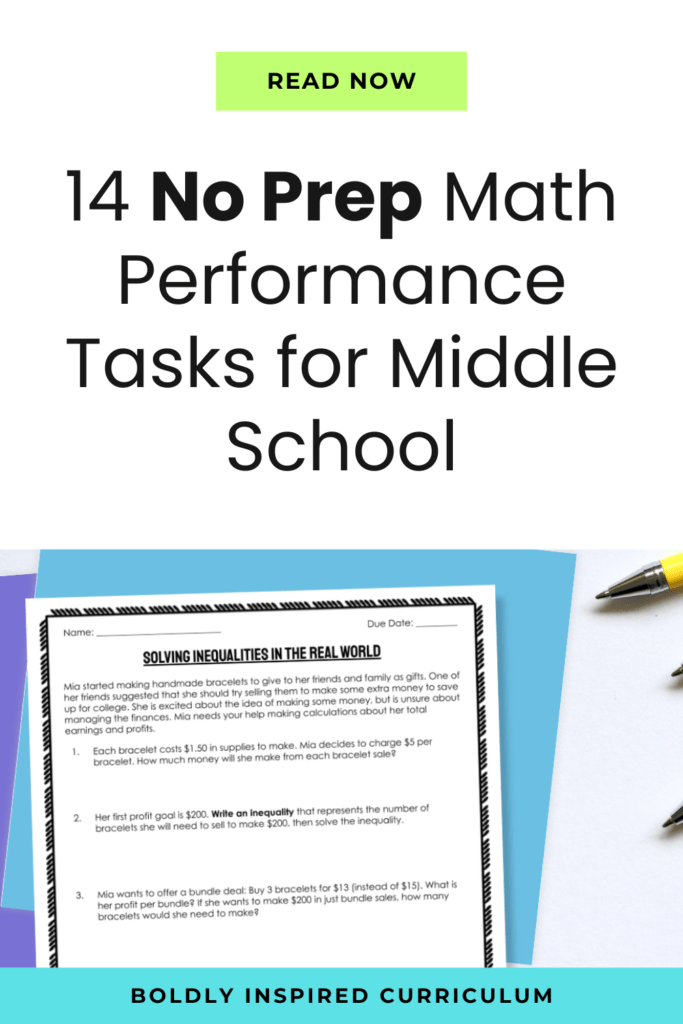
Table of Contents
ToggleSlope Intercept Form
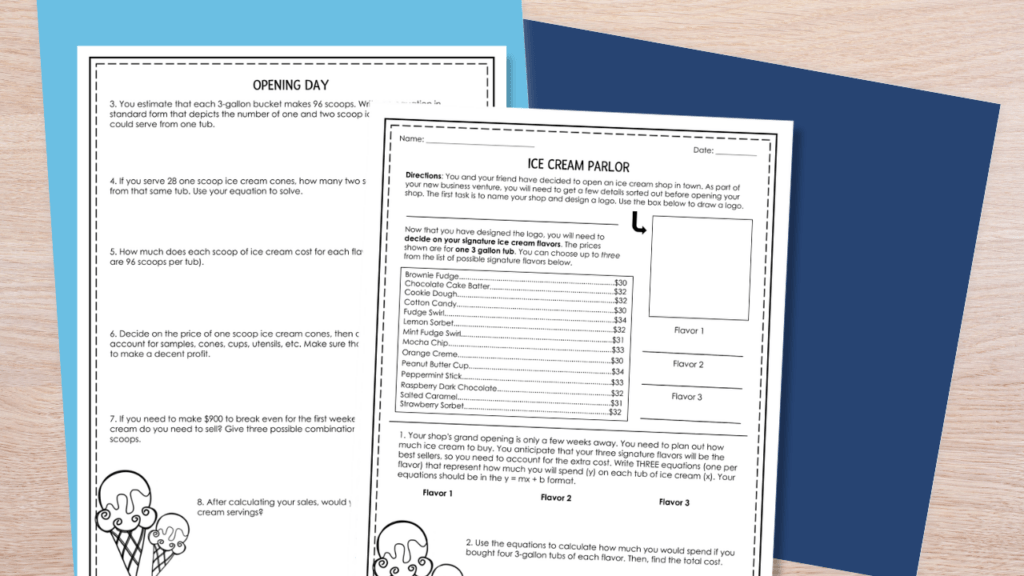
You and your friend have decided to open an ice cream in town. As part of your new business venture, you will need to get a few details sorted out before opening your new shop. Based on these decisions, your students will create and evaluate linear equations to build their business.
This slope intercept form activity offers scaffolding to support students as they learn to solve word problems and navigate the problem solving process. Level 1 gives formulas and scaffolds the word problems, while Level 2 requires your students to think critically and problem solve.
Multi Step Equations
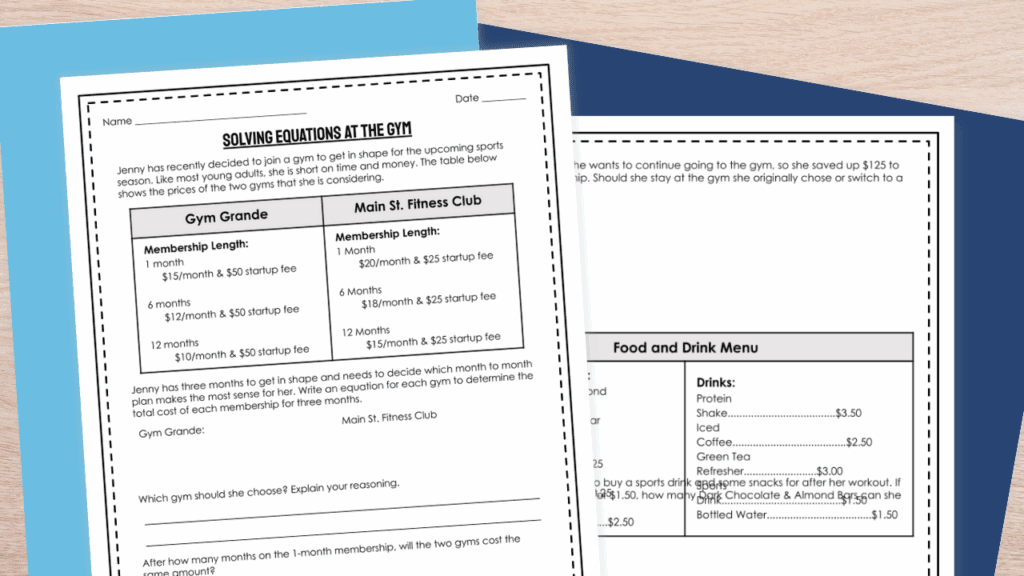
Jenny has recently decided to join a gym to get in share for the upcoming sports season. Like most young adults, she is short on time and money. The table below shows the prices of the two gyms that she is considering. From this scenario, the students will write and solve various equations based on the cost and time constraints she has given.
There are two differentiated versions of this word problems worksheet. Level 1 has scaffolded verbal models to prompt your students through writing equations from word problems. Once the students have written the equations, they are asked to make predictions and defend their solutions. Level 2 requires your students to think critically and problem solve independently.
Scatterplots
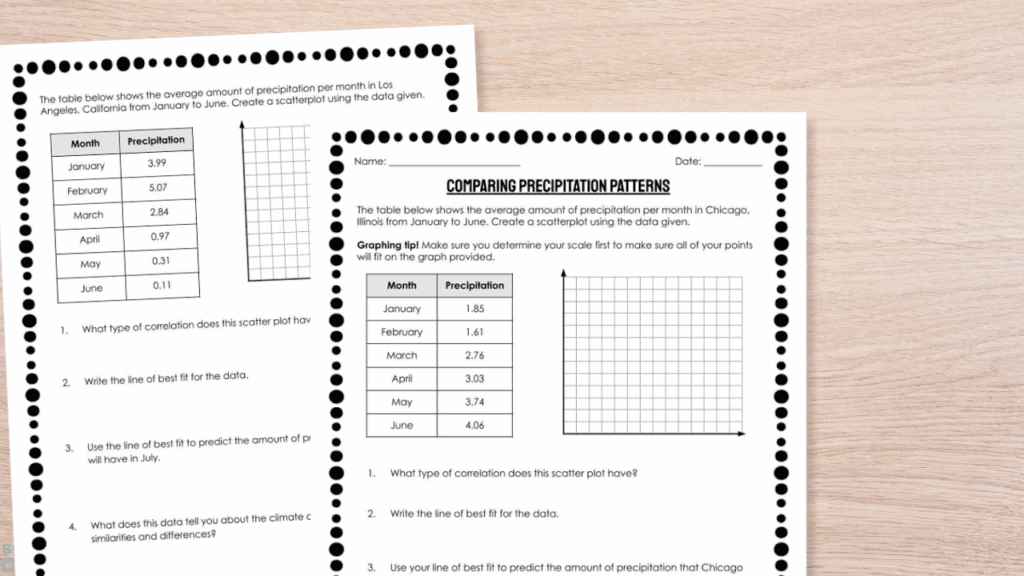
Take your standard scatter plots and line of best fit assignment to the next level with this real world application! Your students are given two sets of data based on precipitation levels in Chicago and Los Angeles. They need to create and analyze a scatter plot of the data, write an equation for the line of best fit, and compare the two data sets.
Linear Functions
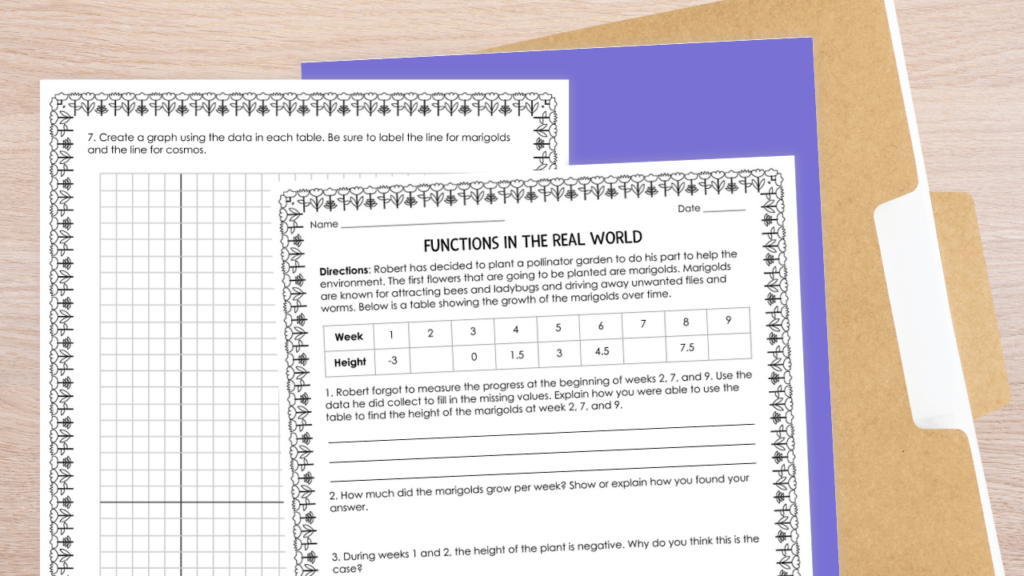
Robert has decided to plant a pollinator garden to do his part to help the environment. The first flowers he’ll plant are marigolds which are known for attracting bees and ladybugs and driving away unwanted flies and worms. This linear functions real world activity will get your students thinking about growth rates and making predictions based on trends.
Compound Probability
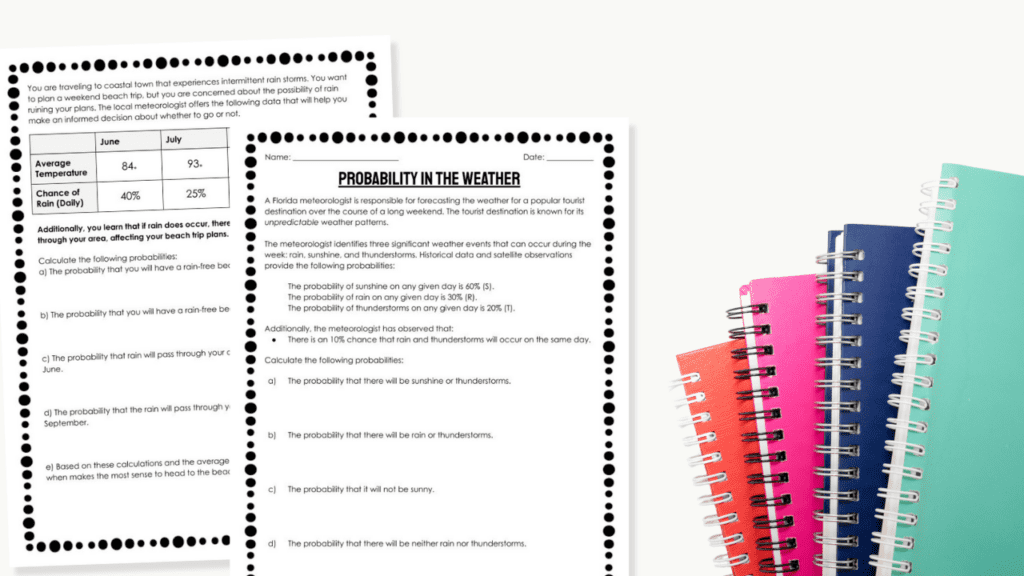
In this 7th grade compound probability activity, your students will calculate the probabilities of independent/dependent events and conditional probability.
With this activity, your students wills be tasked with predicting the weather for a popular tourist destination in Florida. They will calculate probabilities of rain, sunshine, thunderstorms, and hurricanes to help the tourists determine their weekend plans.
Ratios, Proportions, and Percents
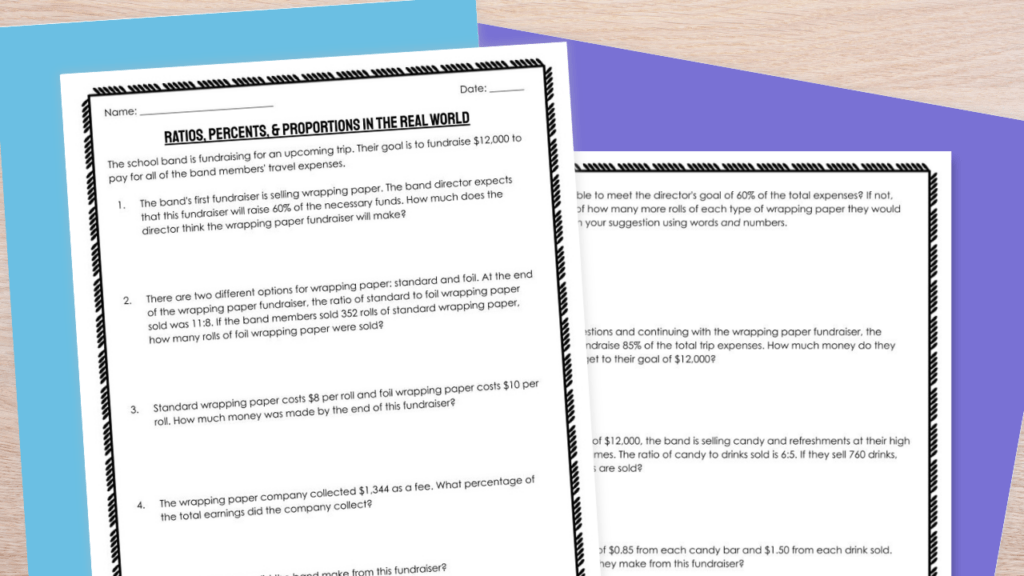
The school band is raising money for their annual trip. They are conducting two fundraisers to reach their goal and need help determining how to get the most bang for their buck. From this scenario, your students will write ratios and proportions based on the information given to help the band members reach their fundraising goal.
Triangles and Angle Relationships
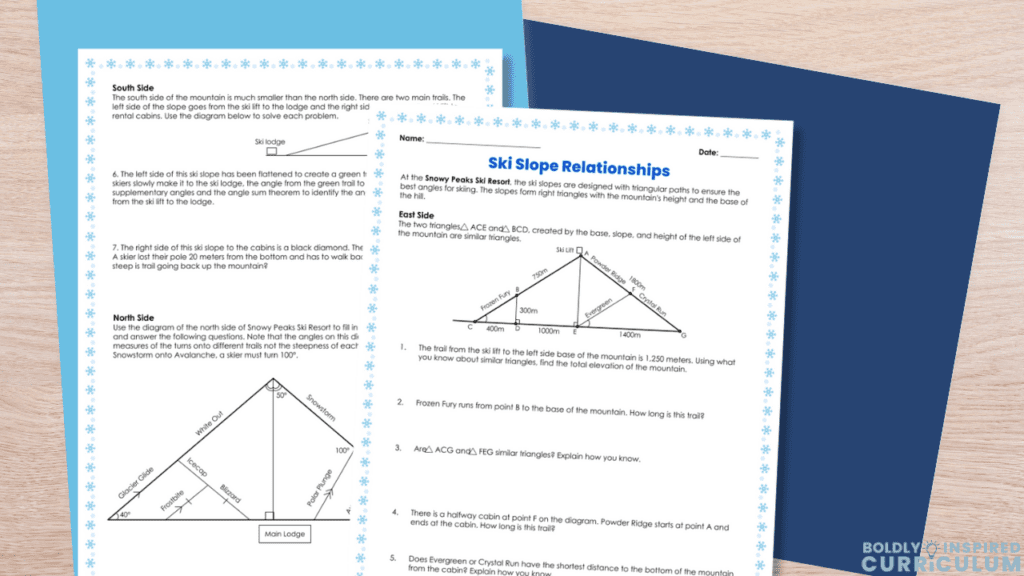
At the Snowy Peaks Ski Resort, the ski slopes are designed with triangular paths to ensure the best angles for skiing. The slopes form right triangles with the mountain’s height and the base of the hill.
This winter-themed angle relationships and triangles activity will help your 8th grade math students think outside of the box. This real world application connects parallel lines cut by a transversal, angle relationships, and similar triangles to ski slopes.
Version 1 assesses finding missing side lengths from similar triangles and finding missing angles from parallel lines and transversals, angle sum theorem, and exterior/interior angles. Version 2 breaks up the activity so you can choose to only assess similar triangle rules and finding missing side lengths using proportions or include angle relationships.
Multi Step Inequalities
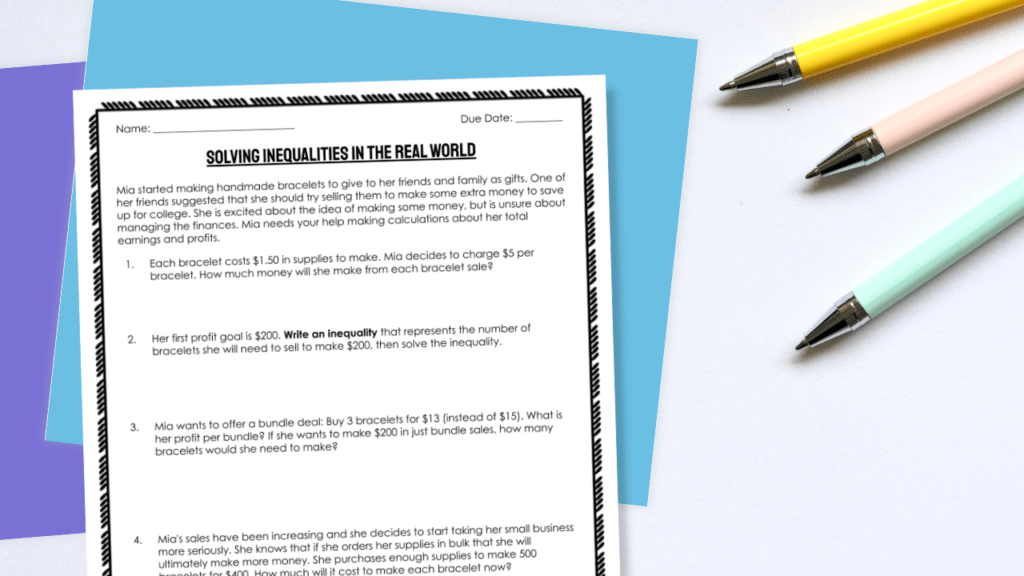
Mia started making handmade bracelets to give to her friends and family as gifts. One of her friends suggested that she should try selling them to make some extra money to save up for college. She is excited about the idea of making some money, but is unsure about managing the finances. Mia needs your help writing and solving inequalities so she can make calculations about her total earnings and profits.
Rotations, Reflections, and Transformations
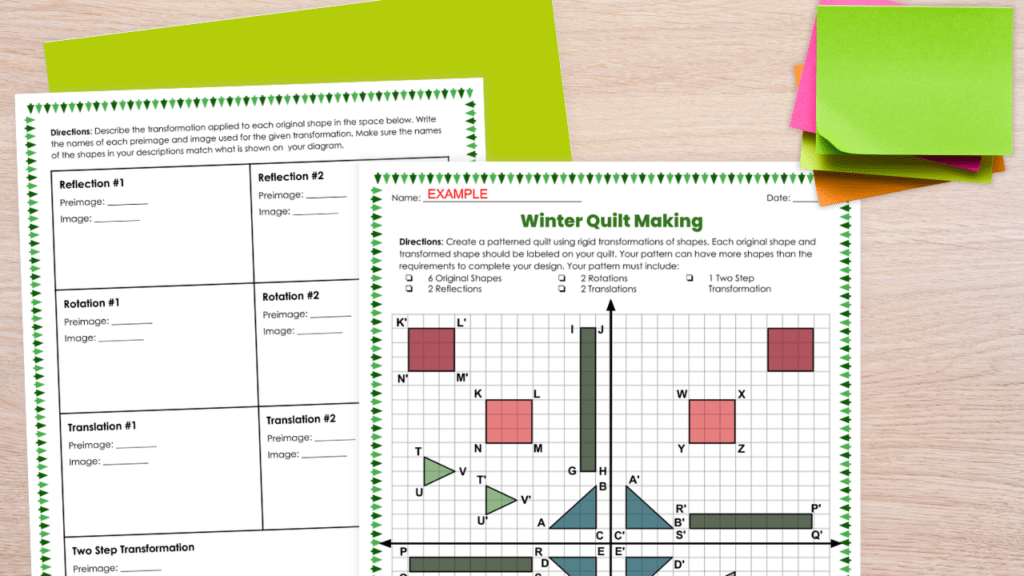
In this winter themed 8th grade math project, students are tasked with using rotations, reflections, and translations to design a quilt pattern. They will draw six original shapes and replicate them using rigid transformations to create a full pattern.
Surface Area and Volume for Rectangular Prisms and Cylinders
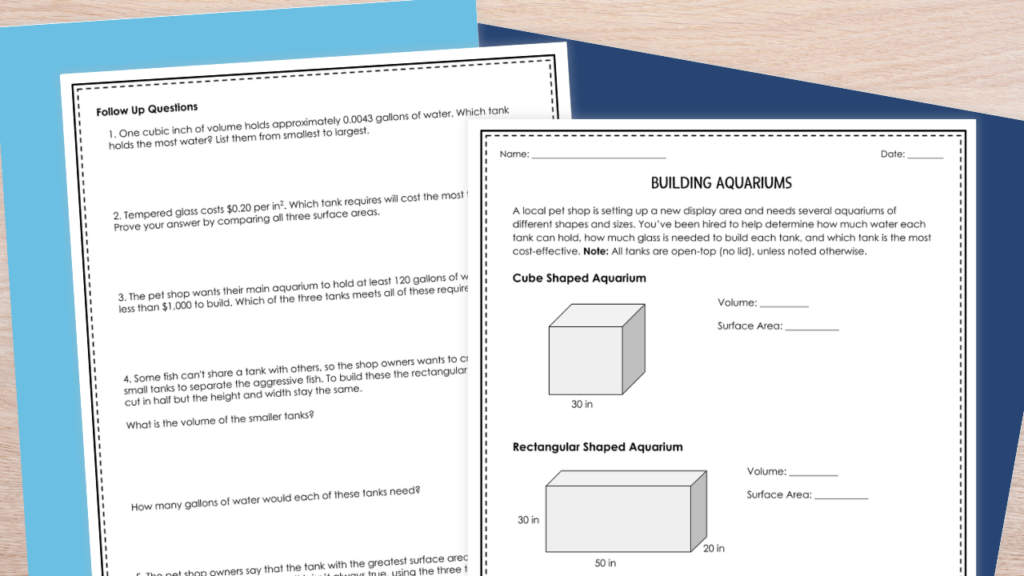
A local pet shop is setting up a new display area and needs several aquariums of different shapes and sizes. You’ve been hired to help determine how much water each tank can hold, how much glass is needed to build each tank, and which tank is the most cost-effective. Your students will find surface area and volume of cubes, rectangular prisms, and cylinders to help a pet store create new fish tanks.
Scientific Notation
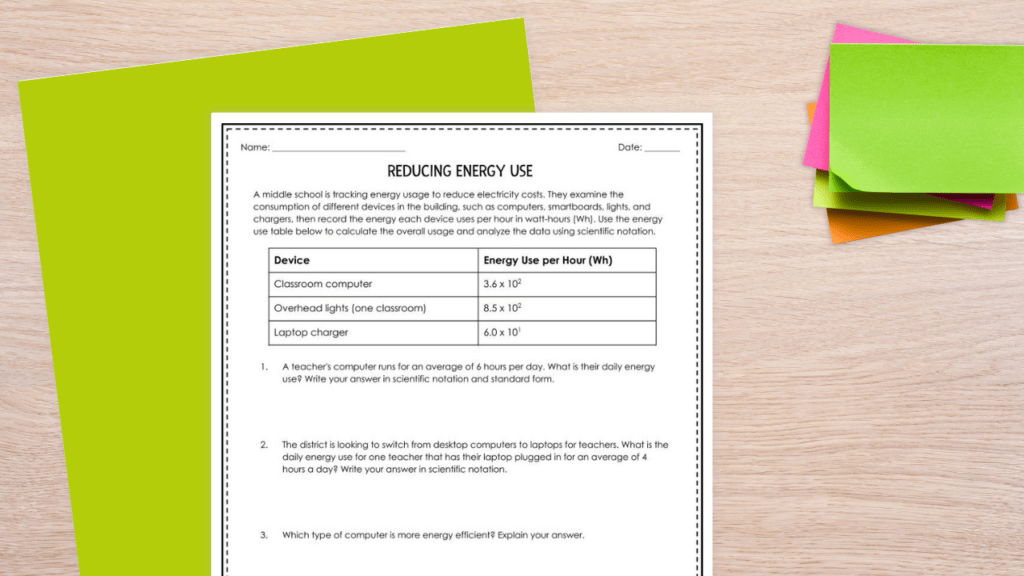
A middle school is tracking energy usage to reduce electricity costs. They examine the consumption of different devices in the building, such as computers, smartboards, lights, and chargers, then record the energy each device uses per hour in watt-hours (Wh). Your students will be given data to calculate the overall usage and analyze the data using scientific notation.
Unit Rates
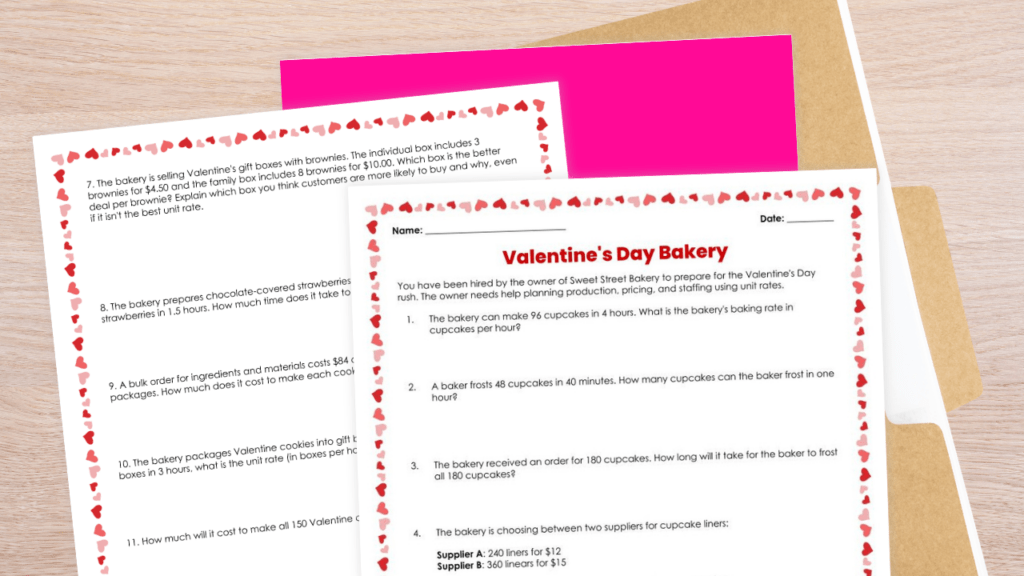
You have been hired by the owner of Sweet Street Bakery to prepare for the Valentine’s Day rush. The owner needs help planning production, pricing, and staffing. Your students will calculate production rates and unit pricing to help prepare a local bakery for the Valentine’s Day rush.
Volume of Cones and Spheres
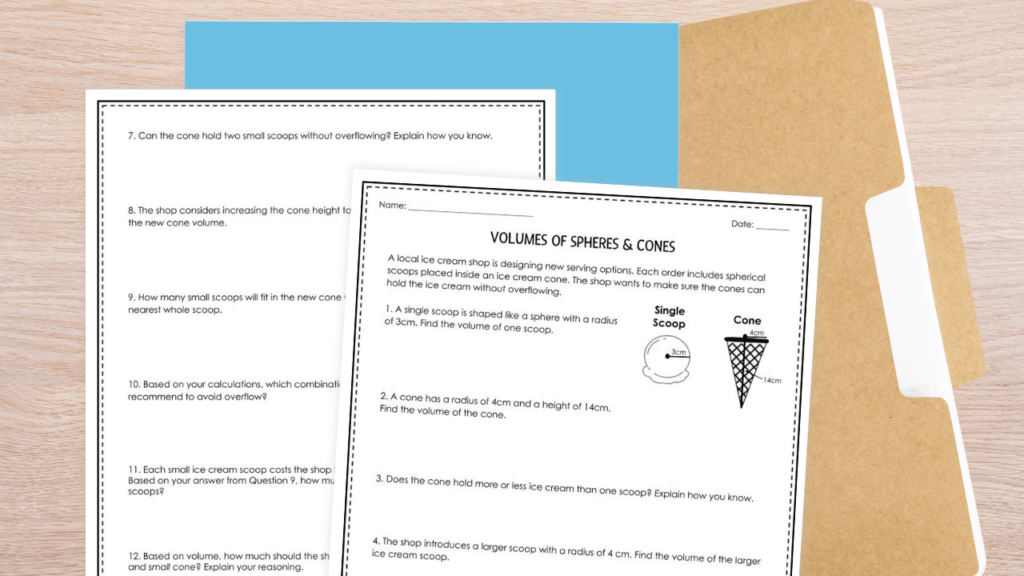
A local ice cream shop is designing new serving options. Each order includes spherical scoops placed inside an ice cream cone. The shop wants to make sure the cones can hold the ice cream without overflowing. Your students need to calculate and compare volumes of spheres and cones to determine the most effective use of space.
Absolute Value
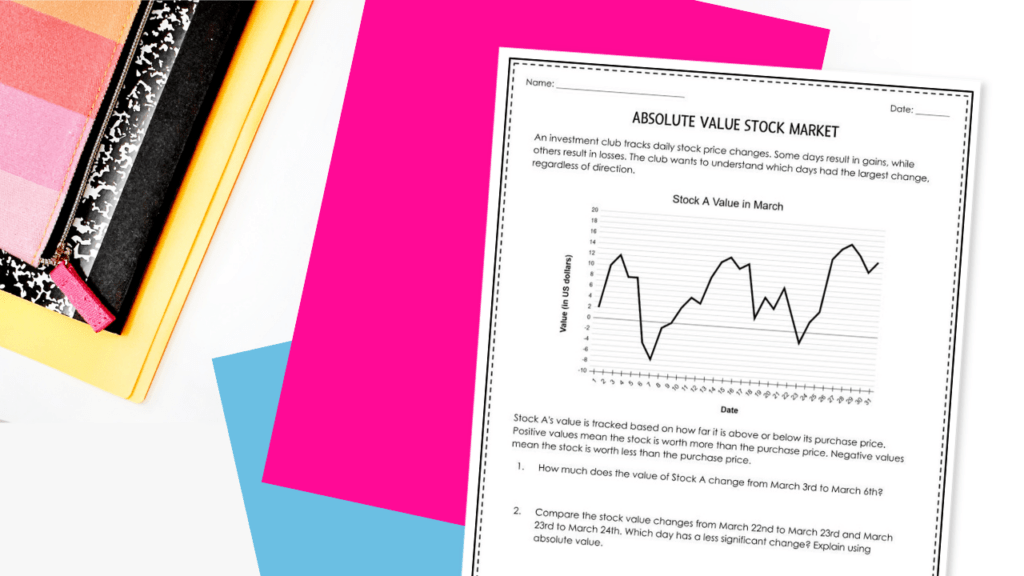
Help your students relate math to real life with this stock market challenge! This activity tasks students with calculating changes in stock values using distance rather than just addition and subtraction. Here’s the challenge:
An investment club tracks daily stock price changes during the month of March. Some days result in gains, while others result in losses. The club wants to understand which days had the largest change, regardless of direction.
Final thoughts about these middle school math performance tasks
Middle school math performance tasks don’t have to be complicated or time-consuming to make a real impact in your classroom. With the right tasks, you can get students thinking more deeply, making connections, and actually using the math they’ve learned. Whether you try one this week or start building them into your routine, even small shifts can lead to more meaningful engagement and a much clearer picture of what your students truly understand.