
If you’ve ever felt like there’s never enough time in the math classroom, you’re not alone. Between planning lessons, grading, answering emails, and supporting students, the workload can feel endless especially for middle and high school math teachers who juggle multiple preps and growing expectations.
The reality is that most teachers aren’t short on effort. They’re short on systems. Saving time in the classroom doesn’t mean cutting corners or lowering expectations. It means creating routines, structures, and workflows that support both you and your students.
In this post, I’m sharing six practical math classroom routines and systems that save time without sacrificing meaningful instruction. These strategies are designed to help you streamline planning, reduce decision fatigue, and create a classroom that runs more smoothly so you can spend your energy where it matters most.
Table of Contents
ToggleTip 1: Use Document Templates
Using the same template for guided notes, quizzes, and homework assignments streamlines creating supplemental resources. Not only do templates make your lessons feel cohesive, but they allow you to just plug in problems to an already created word document or slide deck.
I also like to use a template for my agenda slides. When I am planning out my week, I know that I can just duplicate my slide and have my lesson plan and warm up problem displayed in the same format every day. This takes out any decision making I need to make because I know that I already have a system in place that works.
Tip 2: Plan in Batches, Not Daily
Daily lesson planning and prepping often leads to rushed decisions and unnecessary stress, whereas batch planning allows teachers to work more efficiently.
Batching removes the amount of time wasted by context switching. When you prep a lesson individually, you start in creation mode to design lessons and then switch to organization mode when printing and prepping. This task switching interrupts your workflows and ultimately slows down your productivity.
Every week I use the same workflow for prepping. I start with outlining my lesson plans for all of my classes for the whole week, then I will update my agenda slides. Once I have my plans in place, I can start to pull together the materials that I will need for the week. This includes guided notes, homework assignments, activities, and exit tickets. I will then print it all at the same time and make copies of them together.
The last step in my planning and prepping process is making answer keys. Since a lot of my assignments are reused from past years, I might already have an answer key. Whenever I switch up my lesson plans, I tack creating an answer key onto the end of my prep.
This is a system that went through a lot of trial and error to perfect, but it could look vastly different from what works for you. It’s important to take into account the time of day and day of the week during which your brain functions its best, so that you’re making the most of your prep time.
Tip 3: Find a Filing System That Works for You
Since I always plan and prep a week ahead, it was important for me to figure out a filing system that worked for me and my students. I highly recommend these filing shelves to keep track of copies, extras, and graded assignments. These shelves became an essential part of my daily math classroom routines.
The first place that I use these shelves is next to my desk with the materials and worksheets I needed for each class. I label each of the shelves by class period and make sure it is all set either the afternoon before or before school starts in the morning. This makes it so easy for me to just reach back and grab everything I need.
The second area that I use these shelves is to store extra copies of assignments for students who were absent or lost their worksheets. The shelves are labeled by class and day of the week so that students can easily grab what they are missing without disrupting me or others in the class.
I also use these shelves to hold assignments that I have graded. Similarly to how I use them for organizing lesson materials, I put all the assignments that need to be returned to students on the shelves. With this routine, I can simply grab the stack and return the assignments without having to shuffle around my desk to find them.
What I have found is that it is easy to stay organized and uncluttered if everything has a home. Instead of just putting papers anywhere on your desk or countertops, having math classroom routines in place that work for you helps keep your class (mostly) clutter free.
Tip 4: Use Naming Conventions
Just like your physical materials and files need to have a home to help you stay organized and efficient, your digital files and links should as well. If you don’t currently have a naming system for your files, now is the perfect time to start!
I like to organize my Google Drive into courses then units. Each course that I teach has its own folder. In each course folder are folders for each unit. Depending on what curriculum you use, you could label your folders Unit 1, Unit 2, Unit 3, etc. or you could label them by the unit topic.
Within each of these folders, you will store all of the notes and worksheets you need for each lesson in that unit. I have worked at schools where documents are labeled Lesson 1.1 or Unit 1 Day 1. I don’t have a preference for either naming convention. I say that you should use whatever makes sense to you and what you will remember when typing into the Google Drive search bar.
Tip 5: Streamline Grading & Feedback
Grading does not need to take over evenings and weekends. Instead of grading every assignment in full, rotating between detailed grading and spot-checking allows teachers to maintain accountability while protecting their time. This approach is especially effective for practice work and formative assessments.
This is your reminder that every homework assignment doesn’t need to be graded. There are plenty of alternatives for giving students feedback that don’t take up all of your prep time. I like to assign exit tickets or check just two questions on a homework assignment. This still holds students accountable, but doesn’t have me grading all of their work for accuracy.
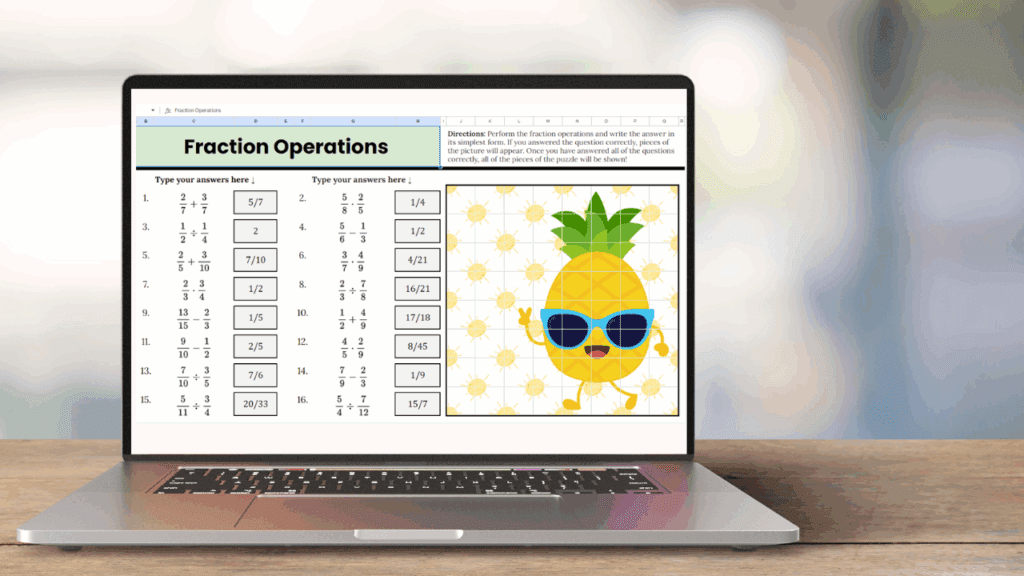
Self-checking digital assignments are also a great way to give your students feedback without having to physically do it yourself. One of my favorite self-checking activities is mystery picture puzzles. Your students will solve a problem, then type the solution into the Google Sheet. If they are correct, the answer box will light up green and pieces of the mystery picture will appear. Check out this fraction operations activity to see how it works ↓
Tip 6: Centralize Your Planning & Tracking
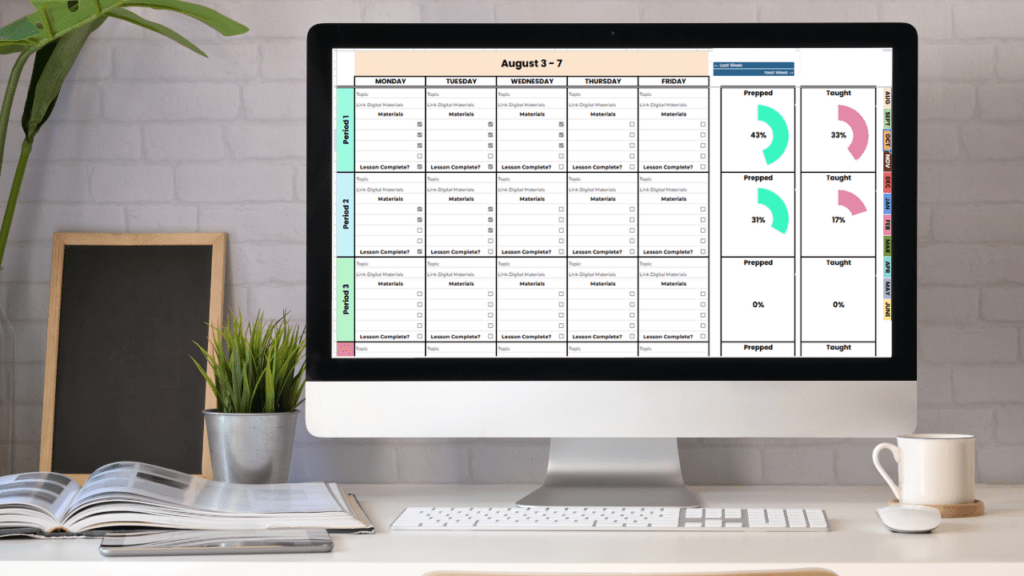
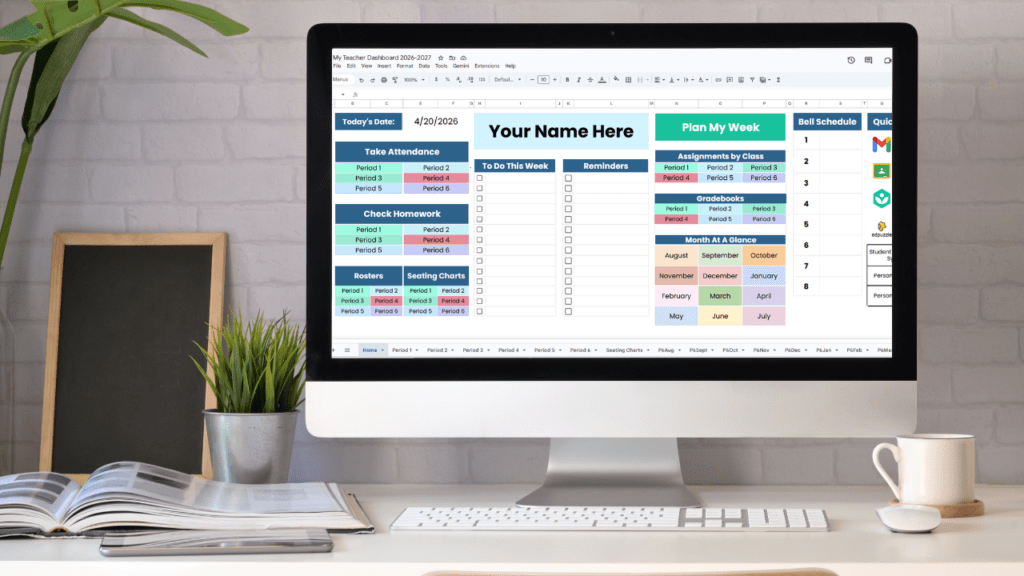
Scattered planning systems cost teachers valuable time and mental energy. When lesson plans, pacing notes, links, and resources are stored in multiple places, teachers spend unnecessary minutes searching instead of teaching. Centralizing planning into one system makes lessons easier to prepare, revise, and access during instruction.
A centralized system allows teachers to reuse lessons year after year, track pacing adjustments, and make quick notes that improve future planning. Everything is accessible in one place, which will in turn reduce stress and decision overload.
This is where a digital teacher planner can make a meaningful difference. By housing lesson plans, notes, and resources in one organized space, teachers save time daily and create math classroom routines that evolve with their specific needs.
Final Thoughts About These Time Saving Math Classroom Routines
Saving time in the math classroom isn’t about doing less. It’s about doing things more intentionally. When you build reusable lesson structures, plan in batches, streamline grading, and centralize your systems, you create space for deeper instruction and better student thinking.
Small shifts add up quickly. A consistent warm-up routine, a clear grading system, or a centralized planning tool can reclaim hours over the course of a week and even more over an entire school year.
The goal is sustainability not perfection. When your classroom systems work for you, you’re able to show up with more clarity, confidence, and energy for your students.