As math teachers, we’ve all experienced that moment when we move on to the next lesson, but a handful of students still haven’t quite grasped the last one. You see the blank stares, the hesitation, the quiet “I don’t get it.” That’s where scaffolding instruction in math comes in.
Scaffolding is preached forwards and backwards in educator prep classes, but it isn’t really taught. Sure, you can use “I do, we do, you do”, but this method is bound to get old and you’ll be ready to change things up before you know it.
You also know that scaffolding isn’t just about simplifying lessons. It’s about strategically supporting students until they can stand on their own. It gives all learners access to grade-level content while building confidence and independence along the way. Let’s get into actionable strategies that actually work, so you can start scaffolding instruction in math class tomorrow!

Table of Contents
ToggleWhy Scaffolding Instruction in Math Class Matters
Scaffolded instruction is a teaching approach that breaks complex concepts into manageable steps and provides structured support as students progress. Think of it as building a staircase where each step helps students move a little closer to mastery.
When students miss foundational skills, they often struggle to keep up and lose confidence. Scaffolding instruction in math helps bridge those gaps by meeting students where they are.
By making grade-level content more accessible, scaffolding allows all students to engage in challenging material without feeling defeated. The work can still be challenging and teach students to problem solve, but the key is adjusting the path to get there, not lowering the bar.
It also helps boost student confidence. Small, structured successes build momentum. When students realize they can understand a difficult topic with the right support, their attitude toward math shifts from “I can’t do this” to “I can figure this out.”
Scaffolded instruction is especially powerful for diverse learners, including multilingual students, students with IEPs, or those with math anxiety. The support you can provide through scaffolding removes barriers that prevent students from fully engaging in the lesson.
Examples of Scaffolding in Action
Here are a few practical ways to start scaffolding lessons at different stages of a math unit:
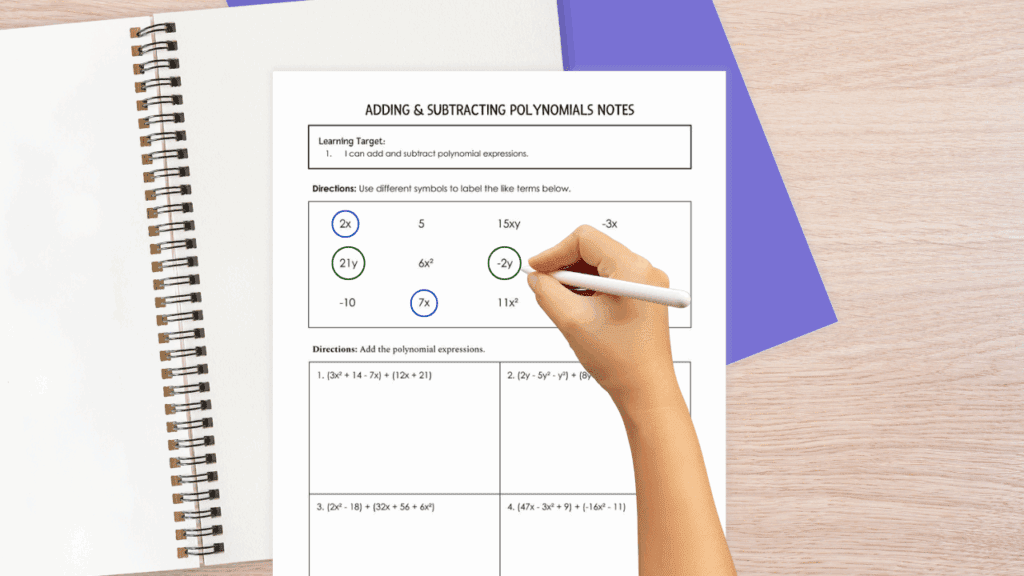
Guided Notes
In your math classroom, scaffolding might look like using guided notes that start with vocabulary and review questions before moving into a new topic. As you move through the notes the problems will get progressively more challenging to give students a variety of examples to use when working independently.
With guided notes, students will also be able to see how to organize their work, identify patterns, and connect concepts before attempting problems independently.
Sentence Stems
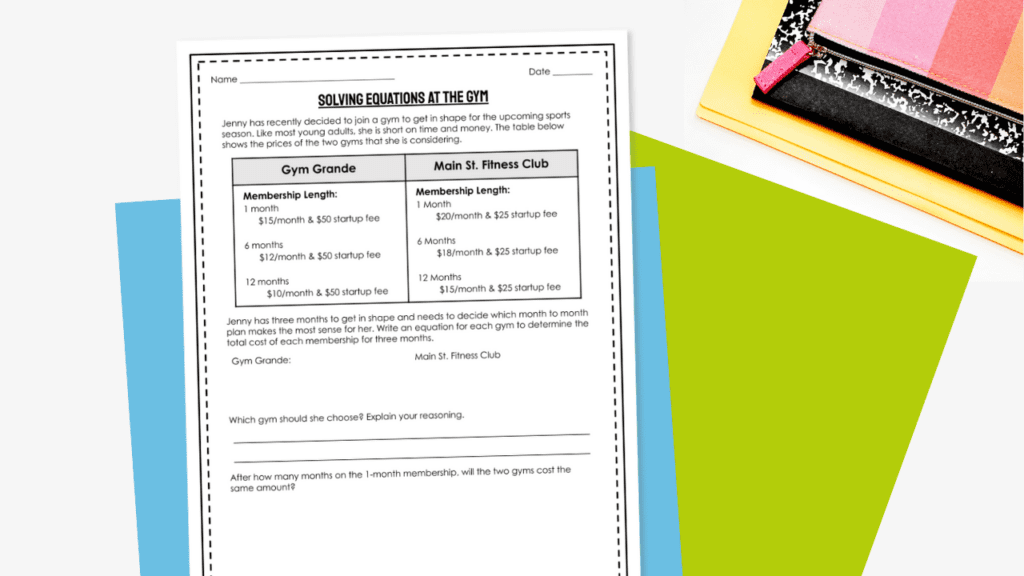
Word problems can be very difficult for students. The biggest challenge I see my students face is not knowing where to start. You can provide sentence stems to help students communicate their reasoning clearly. Phrases like “I started by…” or “I know this because…” encourage students to verbalize and reflect on their thought process.
Tiered Practice
Use tiered practice problems that progress in difficulty. The first few can include guiding questions (“What is the first step to isolate the variable?”) before removing the supports on later problems.
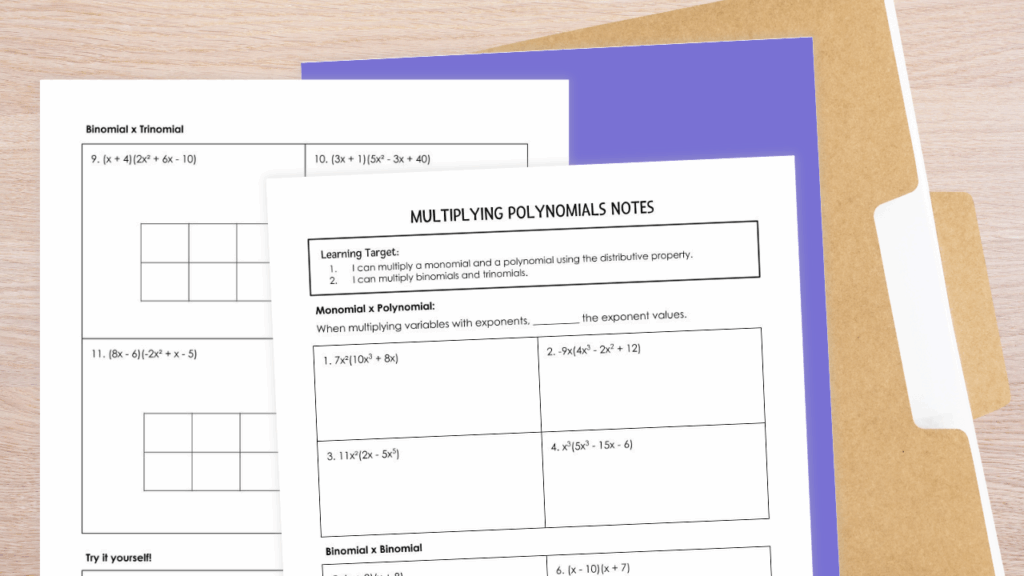
This can also look like showing different methods of solving problems so that students can choose which makes the most sense to them. For example, if you’re teaching multiplying polynomials, teach your students double distribution and the box method.
Visual Aids
Visual aids such as color-coded notes, anchor charts, or graphic organizers also play a huge role. These tools make abstract ideas more concrete, especially for visual learners or students who need extra support connecting multiple representations of math.

Assessments
Offer reference sheets or word banks for early quizzes, then fade them out as students grow confident.
Final Thoughts About Scaffolding Instruction in Math Class
Scaffolding instruction in math class doesn’t have to mean rewriting your entire curriculum. It’s about adding intentional supports that help students succeed with what you’re already teaching. Whether it’s through well-designed guided notes, a reflective prompt, or a real-world task that builds confidence, every scaffold is a step toward mastery.
Looking for ready-to-use scaffolded math resources? Explore all guided notes, warm-ups, and writing prompt templates to make your lessons more accessible without adding prep time.