
This isn’t just another “word problem.” It’s a real-world Algebra 1 project that turns your students into landscape designers on a budget. Instead of asking students to plug numbers into a formula, this inequalities project emphasizes solutions as ranges, not single answers. Students learn to see the bigger picture of what inequalities represent in real-world decision-making.
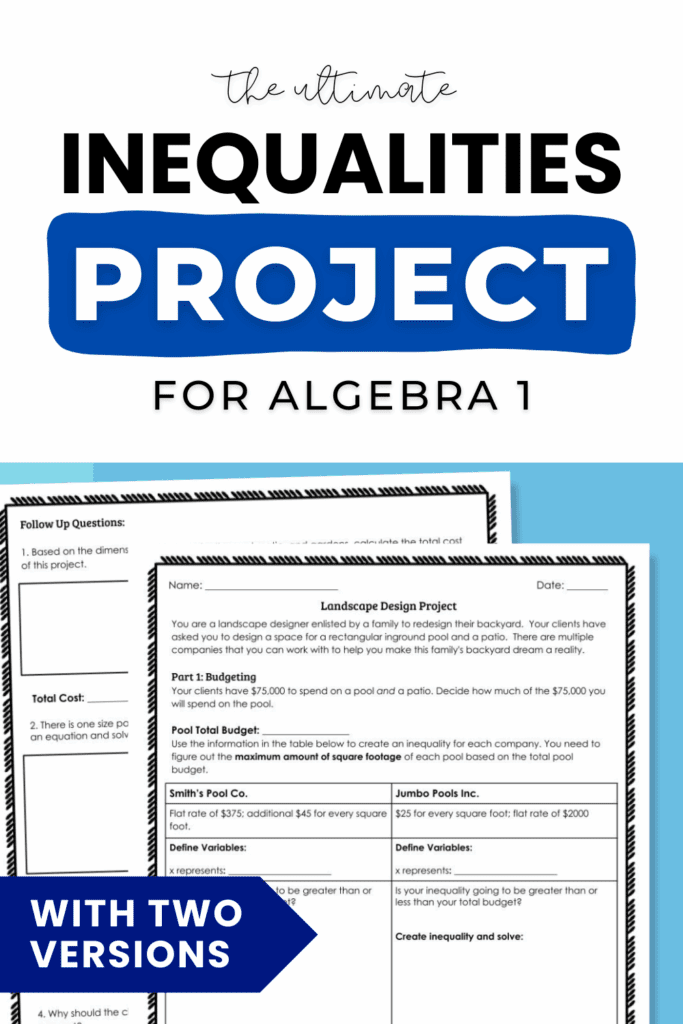
Table of Contents
ToggleWhat is the scenario?
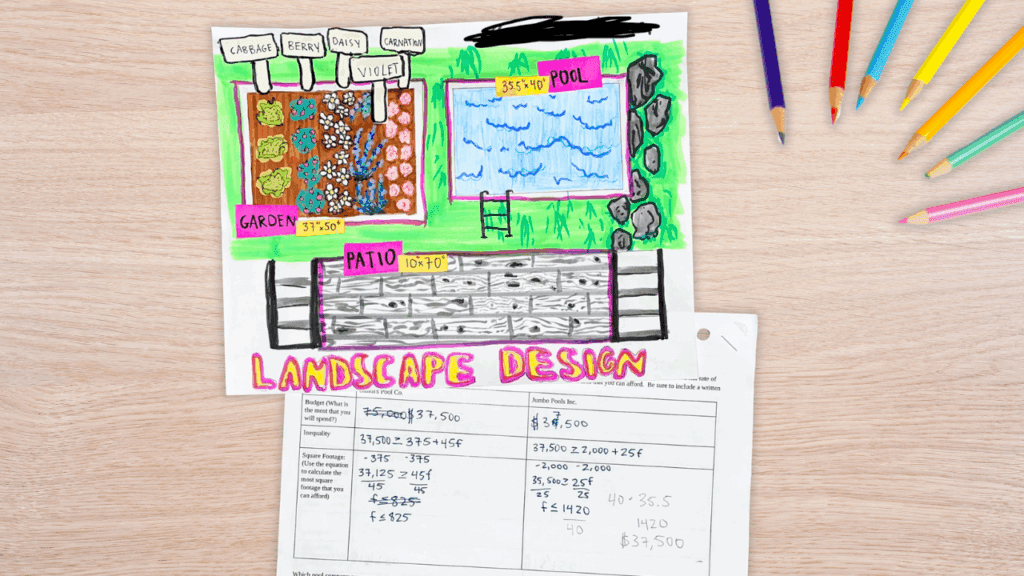
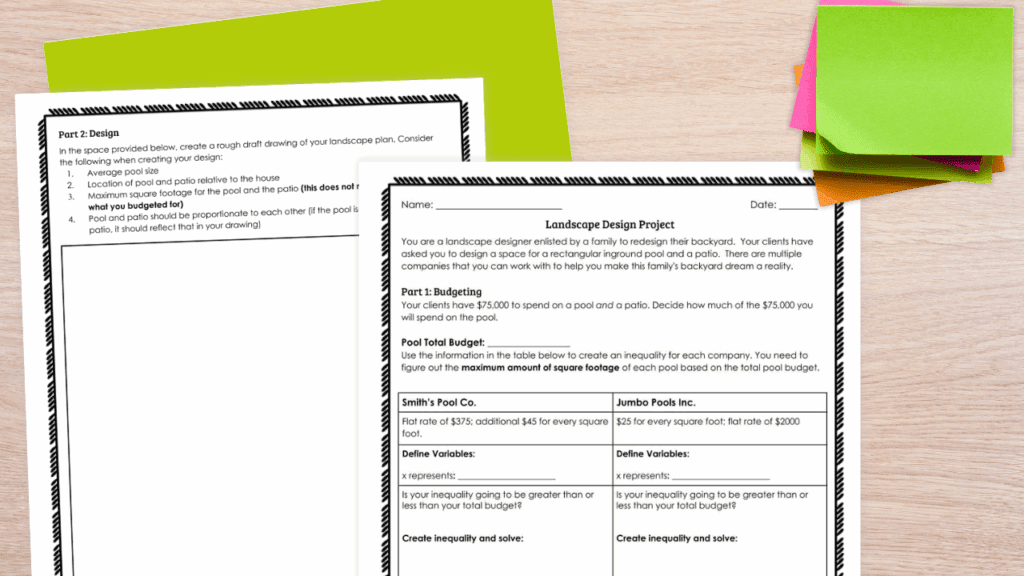
Tasked with building a backyard that includes a pool, patio, and garden, your students will create and solve multi-step inequalities to stay under a $75,000 budget. Each amenity your students design has two options for building companies that they can work with.
It is up to them to decide which business they want to partner with based on the answers they get from the inequalities they created. I always tell my students that cheaper might not always be better. If they can justify their reasoning for choosing one company over the other, they are still on the right track.
Built In Differentiation
This project is made with a variety of learning styles and abilities in mind. Both high level and low level students should be challenged in a way that meets them where they are.
Students that typically struggle in math class and are unengaged love this activity because it encourages them to show their creativity and allows them to make their own choices. The scenario itself is relevant and modern.
Rather than outdated or unrealistic examples, this inequalities project uses a real-world design challenge students can connect with, making the math feel meaningful and engaging.
Version 1
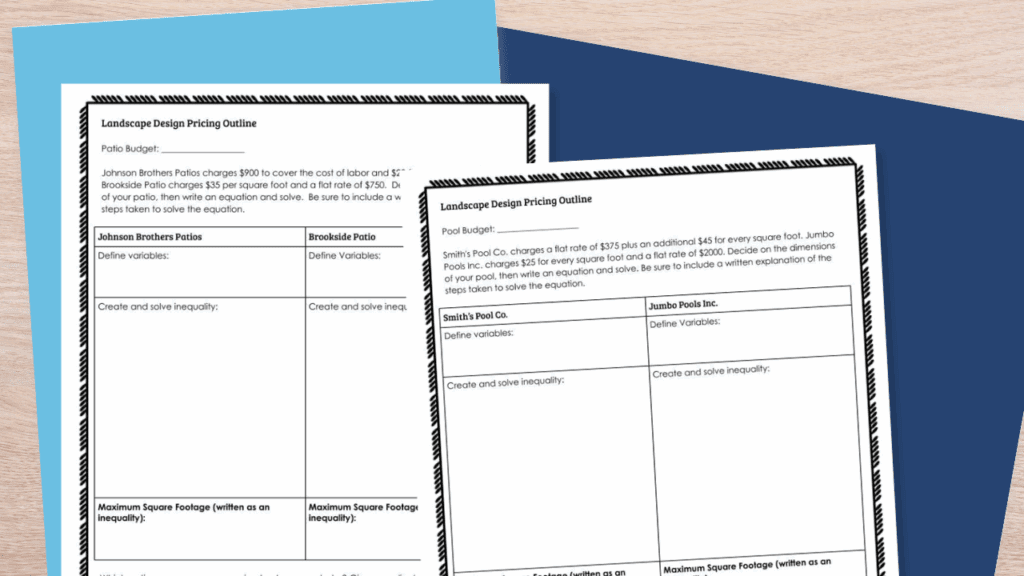
Version 1 was created with the intention of challenging Algebra 1 students and giving them the opportunity to show their independence. This version offers some templates to help them get started. However, they are mostly blank so that your students can show their thinking in different ways. Your students will be given less guidance in the creation of their drawing and with their answers to the follow up questions.
Version 2
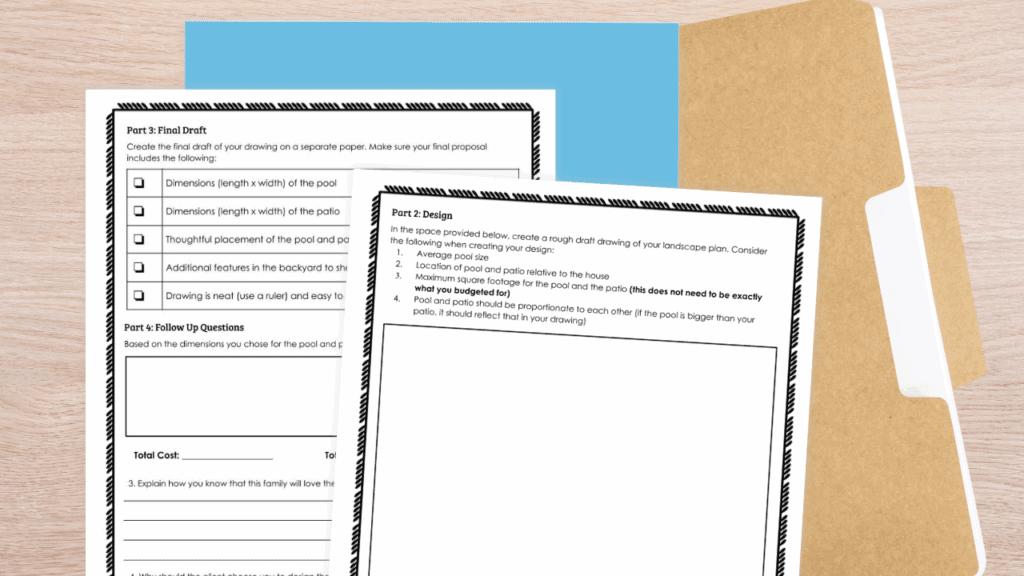
Version 2 of this inequalities project was designed to scaffold and support students while still giving them the opportunity to think critically. This version only requires students to build two backyard amenities.
I have noticed that my lower level students often take more time to complete assignments and get overwhelmed by large projects. By reducing the number of questions and adding intentional prompting questions, I was able to meet these students at their skill level.
The templates are the same as version 1, but they are given a rough draft area for creating their design before moving to the final draft. This lays out exactly what is expected of them with this project and hopefully helps them get started easier.
There is also an added final draft checklist to make sure that they have answered all of the questions and completed every part of the project. Adding this checklist breaks down the project, so that it feels more manageable to complete.
They are also required to justify both their mathematical work and their design choices, which builds critical thinking and communication skills. Instead of simply circling an answer, students reflect on why their design makes sense and how their calculations support it.
Why Teachers Love It
“Perfect project for creating and solving real world inequalities. Loved that it gave students the opportunity to think about a real use of the concept and the ability to use their creativity alongside their math.” — Nicolette F.
“My students loved working on this project. Very helpful to reinforce the concept.” — Math in Kentucky
“I use this project as a ‘level up’ project for extra credit … students who are done early or want additional practice at home.” — Teachbot
Ways to Use This Project in Your Classroom
This project is flexible enough to be used in a variety of ways. I have used this inequalities project in a small group setting as well as an individual summative assessment.
Because the resource includes differentiated versions, you can assign different levels of support based on your students’ needs. Working in groups gives students the chance to collaborate, compare approaches, and strengthen their reasoning.
For a more formal option, this project can be used as an individual summative assessment. Students apply what they’ve learned about solving multi-step inequalities in a creative but structured task, giving you authentic insight into both their process and final answers.
If you’re looking for enrichment or early-finisher activities, the inequalities project doubles as an extension task. Students who complete other work quickly love the chance to tap into their creativity while still practicing core algebra skills.
Why This Project Is Worth Adding to Your Curriculum
If you’ve been looking for an algebra 1 project that’s more than a worksheet, this is it. Students must apply what they’ve learned in your math classroom, think critically, sketch, and reflect, all in one engaging activity. By incorporating this inequalities project, you’re building deeper understanding and giving students a reason to care.
Best of all, the project is aligned to CCSS and TEKS standards which means you can feel confident that it will fit seamlessly into your Algebra 1 curriculum. It reinforces content while challenging them to solve authentically.