

Brain based learning for math class is a huge buzzword in education at the moment. There’s a lot of information going around about elementary aged students and aiding their development, but it is just as important for high school students.
Adolescence is a critical period of brain development. Teens are building executive functioning skills, forming identity, and learning how to learn.
As secondary teachers, we have an incredible opportunity to support that growth through simple shifts in classroom setup, instruction, and lesson design. And the good news?
You don’t have to overhaul your entire classroom to make your math instruction more aligned with how the teenage brain learns best.
Here are practical, classroom-ready, brain-friendly strategies that work beautifully in middle and high school math.
Table of Contents
ToggleCreating an Optimal Learning Environment
Classroom set up is the foundation of creating an optimal learning environment. There are many different opinions and ways to setup a classroom. These are some of my favorites:
Declutter Your Walls
There’s a difference between a colorful classroom and a busy one. Too many visuals and things to look at on the walls can often be distracting to students.
Placing your decorations strategically makes a huge difference! I prefer using a few posters and content on the walls so that the students are subconsciously seeing and learning the material.

Adjust Your Seating Arrangements
Figure out what is best for you and your students. Do they work better in groups or individually? Do you want your students to have individual desks but be able to form groups easily? Think about how you run your classroom and what would make the most sense.
You might choose pods for group work, rows for direct instruction, or pairs for partner practice. The physical layout should support (not fight against) the kind of thinking you want happening in the room.
A well-designed layout can instantly make students feel more comfortable, more focused, and more ready to participate.
Reduce Fear and Increase Engagement
One of the most powerful strategies for brain based learning for math class is creating an environment where students feel safe making mistakes. When students are anxious, embarrassed, or afraid of being wrong, the brain shifts into self-protection mode. Learning becomes secondary.
But when students feel safe, connected, and supported, they enter a state often referred to as relaxed alertness—calm, engaged, and ready to think deeply.
By creating a positive and safe environment, the students will be more apt to participate, ask questions, and be engaged. When your students are in this state of mind, they can be challenged and problem solve in a deeper way.
Using Real World Applications to Challenge Your Students
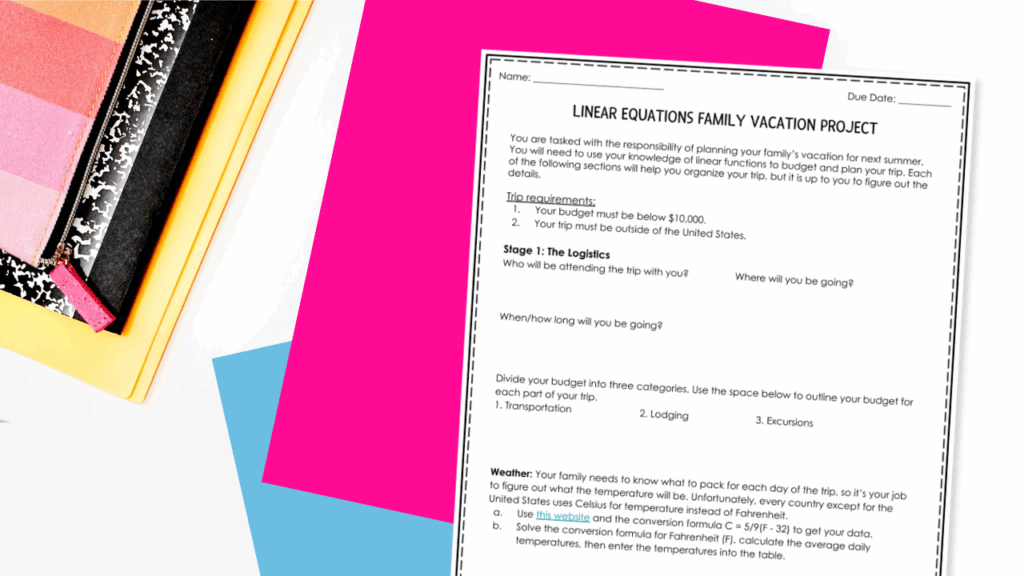
One of my favorite ways to challenge my students is with real world problems that encourage students to embrace “the struggle.” Although the minute I mention a word problem I receive a synchronous groan in return, the most important part of math class is this problem solving aspect and figuring out how to work through problems.
Throughout the year, I intentionally build routines around:
- normalizing productive struggle
- collaborating instead of competing
- celebrating mistakes as part of the learning process
- showing multiple approaches to the same problem
These routines slowly loosen the belief that math is only about “watching the method → practicing the method → reproducing the method on the test.”
Instead, students start to see math as a series of decisions, strategies, and flexible thinking which is exactly what the brain needs to grow.
Develop Working Memory
Working memory is the mental space where students hold information long enough to make sense of it. And for teens? It’s still developing. Strong memory skills are not solely innate, they can be developed over time if nurtured properly.
The most powerful things you can do:
Build in processing time
Most adolescent-aged students can only sustain their attention and process 10-15 minutes of information. It’s so important to give students the opportunity to use what they’ve learned and apply it independently.
Make time for brain breaks
Brain breaks benefit both processing and attention at any level. Of course, it will look different at the high school level, but there are still many opportunities for stretching, transitions, and other breaks in the lesson. High schoolers may act “too cool,” but their brains still need these moments.
Integrate movement and hands-on activities
By adding hands-on activities where the students are able to learn and explore in different ways, students process the information more deeply.
Final Thoughts About Simplifying Brain Based Learning for Math Class
Brain-friendly teaching isn’t a trend. It’s a way of designing instruction that aligns with how students actually learn.
And in math class, where anxiety can run high and confidence can dip quickly, these strategies make an enormous difference.
Small tweaks like:
- simplifying your classroom visuals
- intentionally grouping your seating
- normalizing productive struggle
- building in short processing breaks
- incorporating movement and hands-on activities
…can transform your room into a place where students feel confident, curious, and ready to take risks.