Traditional study guides often fall flat. Yes, they can help students organize what they’ve learned, but they’re not always the best tool for helping your students study for a math test, especially when students rush through them without much thought.
If you’ve ever handed out a study guide only to see students complete it half-heartedly (or not at all), it might be time to try something different. Whether you’re prepping for a test, reviewing a unit, or wrapping up a semester, these alternative review activities can make learning more memorable and effective.
Here are 6 teacher-approved alternatives to a study guide that will get your students engaged, thinking critically, and even enjoying the review process.

Table of Contents
Toggle1. Task Cards: Review in Small, Manageable Pieces
Task cards are a classroom favorite for a reason. They break down review into manageable chunks, making even complex concepts feel more approachable.
You can use them as stations, in pairs or small groups, or for a whole-class scavenger hunt. They’re also helpful for targeting specific skills within a unit when your students are studying for a math test, such as adding, multiplying, and dividing radical expressions. This bundle has 80 task cards that can be used for mix and match radical operations review.
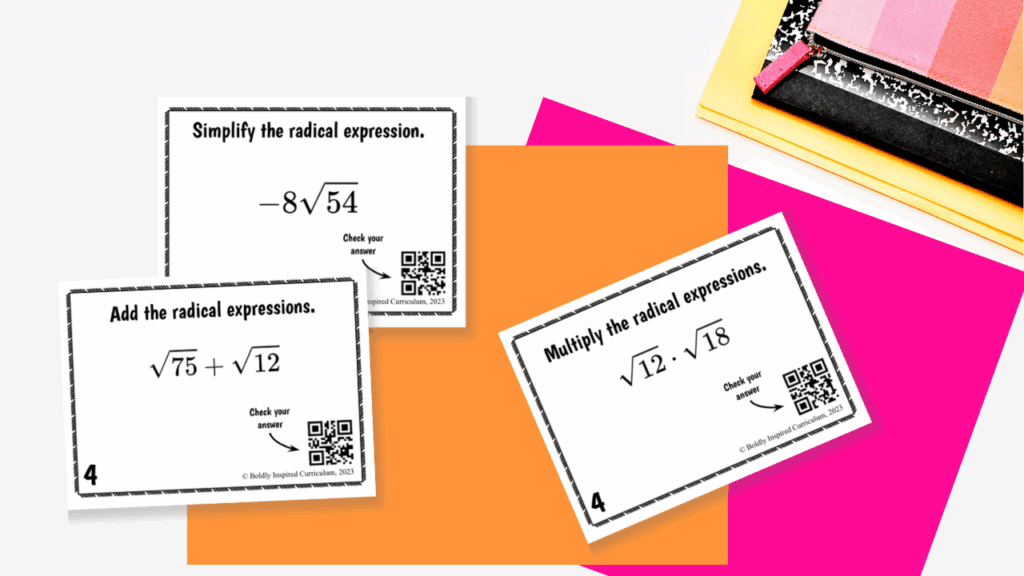
Teacher Tip: Laminate your task cards to use them year after year, or go digital with self-checking versions for independent practice.
2. Review Stations: Get Students Moving and Engaged
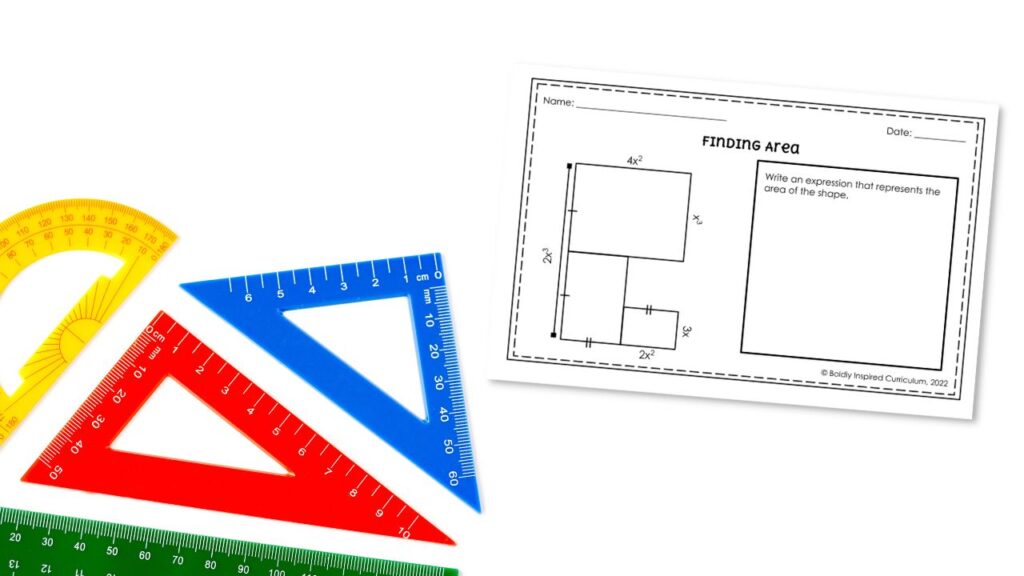
If your students are fidgety or bored with paper-pencil tasks, review stations are a great way to add movement and variety. For this style of group work, you will want to split your students into groups of 3-4. To make sure that there is always a spot for your students to work, you may want to add an extra station to the number of groups that you have.
Each station can focus on a different skill, concept, or type of question. Students rotate every 8–10 minutes, collaborating and discussing as they work. It’s an easy way to hit multiple skills without overwhelming them with a long worksheet.
3. Whiteboard Challenges: Instant Feedback and Whole-Class Participation
Give each student (or pair) a whiteboard and marker, then project or call out problems one at a time. Students solve and hold up their answers for instant feedback. This is especially effective for practicing procedures (like solving equations or simplifying expressions), quick checks for understanding, sparking discussion around different solving strategies.
It’s low-prep, high-engagement, and helps you see exactly where students are getting stuck in real time.

4. Choice Boards: Empower Students to Review Their Way
Choice boards give students agency and flexibility which comes in handy when you’re helping students study for a math test with a wide range of content.
I have tried a few different ways of formatting choice boards. My personal favorite is having two or three activities for my students to choose from. The different choices could vary based on skills assessed or the type of activity (ex. task cards vs. worksheet vs. digital activity). This gives students the opportunity to choose how they want to review.
I have also used choice with a single study guide or worksheet. Most free math worksheets and textbook pages have 20+ problems on them.
If you don’t think your students need to do that many problems, you can have them choose the problems they want to complete. You could give options like choose six problems from the front side and six problems from the back or choose three problems from each category.
This way they are getting some choice, but still completing the different types of skills they will be assessed on.
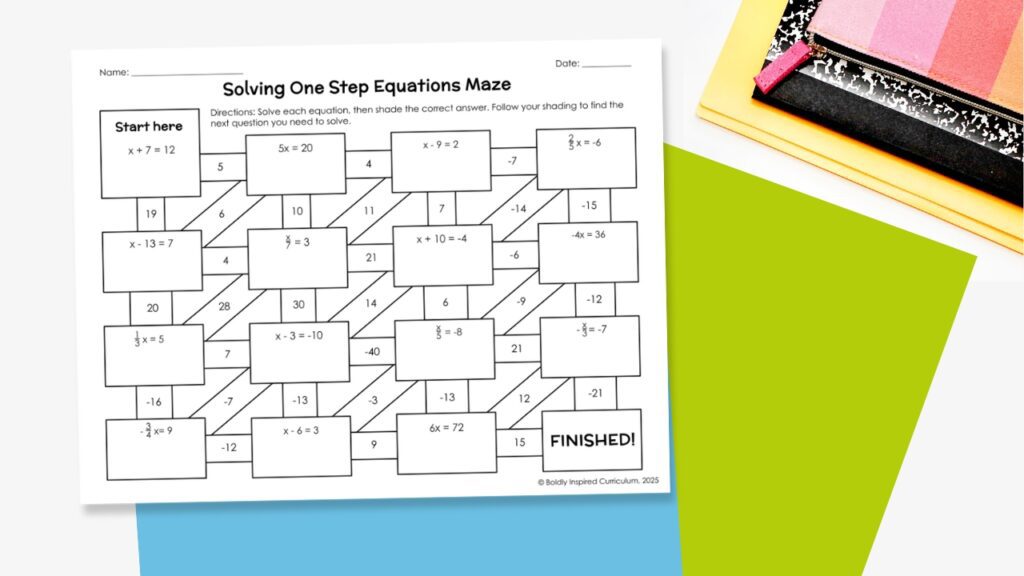
5. Digital Review Games: Make Practice Fun
Sometimes, all you need is a little competition. Digital tools like Blooket, Gimkit, and Quizizz make it easy to gamify your review. You can create custom games with your own questions or use templates shared by other teachers. Students review without even realizing how much they’re learning.
6. Error Analysis Challenges: Build Critical Thinking
Instead of asking students to solve problems, flip the script: have them analyze incorrect work.
Error analysis encourages students to:
- Look closely at the process, not just the answer
- Identify misconceptions
- Explain their reasoning clearly
Use these in stations, as warm-ups, or during whole-class discussion.

Bonus: Error analysis deepens conceptual understanding and helps students prepare for assessments.
Final Thoughts About How to Help Your Students Study for a Math Test
There’s nothing wrong with giving students a study guide, but it shouldn’t be your only review tool. If you want your students to feel confident and prepared when studying for a math test, they need active, meaningful practice that goes beyond rote memorization.
These strategies not only help students retain and apply what they’ve learned—they also make your classroom a more engaging, student-centered space. Try mixing and matching a few of these activities in your next review week—and watch your students’ energy, focus, and thinking come to life.